- 16 September, 2026
- 22
- 0
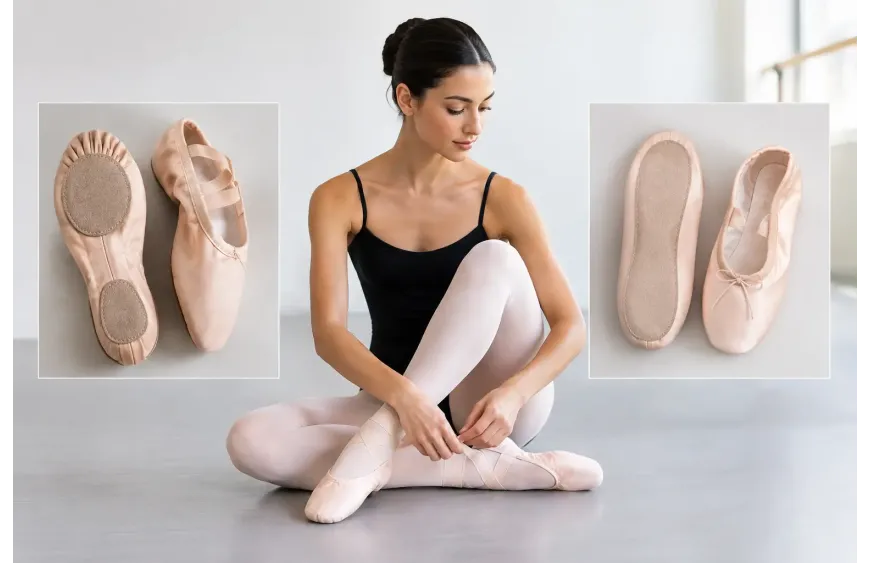
A ballet slipper should let the teacher see the work of the foot, not hide it. That is why the split sole versus full sole decision matters more than it may seem when buying a first pair or replacing well-worn class shoes. The right choice depends on the dancer's age, training stage, foot shape, studio expectations, and how the shoe feels while pointing, flexing, and moving through class.
For many dancers, a properly fitted slipper is the first piece of footwear that makes ballet technique feel more precise. It should sit close to the foot without squeezing the toes, twisting under the arch, or leaving extra fabric at the heel. Whether that slipper has one continuous sole or two smaller sole pads changes its look and feel underfoot.
What Is a Full Sole Ballet Slipper?
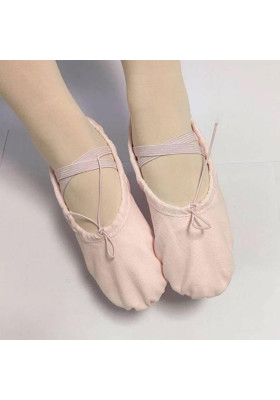
A full sole ballet slipper has one continuous suede sole running from the ball of the foot to the heel. The leather or canvas upper wraps around the foot, while the outsole gives a consistent layer of contact beneath it.
This traditional construction is often chosen for young beginners and recreational ballet students. A full sole can feel stable and familiar to a dancer who is learning how to point the feet, stretch the knees, and place weight correctly through the floor. It also tends to be a practical option for families buying shoes for growing children, especially when a teacher has requested a classic full-sole style.
The word "full" can be misleading. A full sole does not physically build an arch or do the dancer's work for them. Good technique still comes from correct training, strength, and consistent practice. What it can do is provide a clear, continuous base under the foot, which some new dancers find easier to sense.
Who often benefits from a full sole?
Full sole slippers are frequently appropriate for preschool and elementary-age ballet classes, dancers at the very beginning of structured training, and students whose school specifies this style in its dress code. They can also suit dancers who simply prefer a more traditional slipper or want a little more suede beneath the middle of the foot.
A dancer with a very high arch should not automatically be placed in a split sole, and an adult beginner does not automatically need a full sole. The teacher's requirements and the actual fit of the shoe should lead the decision.
What Is a Split Sole Ballet Slipper?
A split sole ballet slipper has separate suede pads under the ball of the foot and heel, with the arch area uncovered. This construction creates a closer visual line through the arch when the dancer points the foot. It also reduces bulk beneath the instep, so the slipper can feel more like a second skin.
Split sole shoes are popular with intermediate and advanced ballet dancers, teens, adults, and dancers who enjoy a streamlined appearance in class, rehearsals, and performances. They are also widely used in jazz and contemporary settings, although the right shoe category should always match the class and studio direction.
Because the center of the sole is open, a split sole may make the foot's articulation more visible. That can be helpful when a dancer is working on fully stretching through the ankle and toes. It does not create a better point by itself, however. A shoe should show developed technique, not substitute for it.
Why split soles can feel different
The difference is most noticeable when pointing the foot. A split sole usually follows the curve of the arch with less resistance and less material bunching underneath. Some dancers also like the greater floor sensitivity during tendus, relevés, and small jumps.
That closer fit means sizing deserves extra attention. A split sole that is too long may wrinkle under the arch. One that is too tight can pull the toes inward, flatten the foot shape, or place uncomfortable pressure on the Achilles area. The goal is a clean fit with toes lying flat and enough length to fully point without strain.
Split Sole Versus Full Sole: The Real Differences
The most visible difference is the sole layout, but dancers feel several practical differences in class. Full sole slippers generally offer a more traditional feel and a continuous suede surface. Split sole slippers offer a more contoured look and tend to follow the pointed foot more closely.
Neither style is universally better. A young dancer who is learning basic positions may thrive in the full sole shoe requested by the studio. A returning adult student may prefer the flexibility and visual line of a split sole. A serious ballet student may keep more than one pair if different classes, examinations, or performances call for different requirements.
Material also affects the decision. Leather ballet shoes are often durable and gradually mold to the foot, though they may feel firmer at first. Canvas shoes are lightweight, breathable, and commonly preferred for a clean, close appearance. Both materials are available in split sole and full sole constructions, so it is useful to decide on fit and sole type before focusing on fabric.
Let the Studio Dress Code Lead
Before choosing based on appearance, check the teacher's or studio's requirements. Many children's programs specify a particular color, material, and sole construction to keep the class uniform and to support the way the instructor teaches foundational work. For examinations, performances, and competition routines, requirements can be especially specific.
Parents should avoid buying a larger size "to grow into." Ballet slippers are not street shoes. Extra room at the toes or heel can make it harder for the teacher to see foot placement and can create folds that distract from technique. Growth happens quickly, particularly for youth dancers, but a shoe that fits correctly today is safer and more useful in class.
For adult dancers, studio expectations still matter. Some open ballet classes allow flexibility, while others ask students to wear a specific style. If the instruction is unclear, asking before class prevents an unnecessary exchange.
How to Check the Fit at Home
A ballet slipper should be tried on with bare feet or with the tights normally worn in class. The heel should sit securely in the heel cup, and the shoe should lie smooth across the top of the foot. Toes should be straight and relaxed, not curled or compressed against the end.
Have the dancer stand flat, rise to demi-pointe, and point one foot while seated or with support nearby. Watch for gaping at the sides, excessive bunching under the arch, or a heel that slips off. Elastic placement also matters. Properly secured elastics keep the shoe in place without digging into the ankle.
Drawstrings, when included, should be adjusted gently and tucked in. They should never be tied in a knot that creates pressure across the top of the foot. A neat fit is about comfort as well as appearance.
Common Buying Mistakes to Avoid
The first mistake is treating split sole as an advanced-only shoe and full sole as a beginner-only shoe. Those are useful patterns, not fixed rules. A teacher may choose either option for sound reasons, and each dancer's foot responds differently.
Another mistake is assuming a split sole will make an arch look higher. It may reveal the arch more clearly, but the dancer still needs strength, mobility, and proper placement. Likewise, a full sole should not be selected because it is expected to provide structural foot support. Ballet slippers are designed for studio movement, not for everyday walking or orthopedic support.
Finally, do not judge a slipper only while standing still. The shoe needs to work during pliés, rises, pointed feet, and directional changes. If a dancer cannot comfortably articulate through the foot, the fit or style deserves a second look.
When Personal Fitting Makes a Difference
Ballet shoe sizing varies by brand, material, width, and sole construction. A size that works in one canvas split sole may not fit the same way in a leather full sole. That is why trying on more than one option can save time and help a dancer feel confident at the barre.
For Toronto and GTA dancers, Dancewear Champions offers knowledgeable, personal fitting guidance in Thornhill for ballet slippers and other dance footwear. It is particularly helpful for first-time buyers, growing dancers, and anyone moving from a full sole to a split sole style.
The best ballet slipper is the one your teacher approves, your foot can work naturally in, and you barely notice once the music begins.
Tags Split sole, Split Sole Ballet Slipper, Full Sole, Jazz Dance Shoes, Canvas split sole foldable Ballet Shoes, Canvas split sole Ballet SLIPPERS, Ballet SLIPPERS