


- 05 October, 2026
- 15
- 0
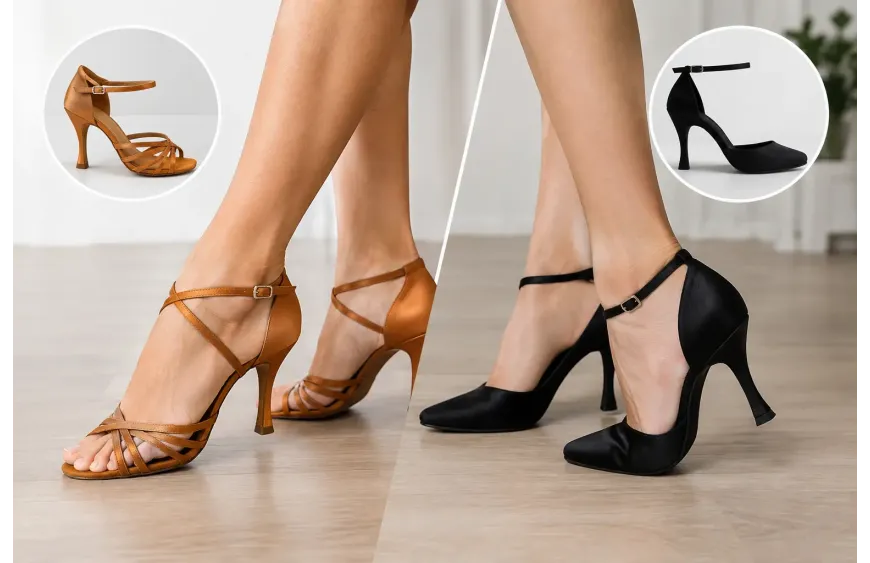
A shoe that feels perfect during a salsa turn can feel restrictive in a slow foxtrot, and the reverse is just as true. When comparing salsa heels versus ballroom heels, the main question is not which one looks more elegant. It is which construction helps you move with control, comfort, and confidence in the dances you actually do.
For many dancers, the categories overlap. Both often have suede soles, secure straps, and dance-specific heels. Yet the toe shape, flexibility, weight distribution, and level of coverage can create a very different experience on the floor.
Salsa Heels Versus Ballroom Heels: The Core Difference
Salsa heels are generally designed for fast, rhythm-driven Latin movement. They are commonly open-toe, lighter in appearance, and more flexible through the front of the foot. This supports the quick weight changes, spins, pointed feet, and expressive leg action that salsa dancers use.
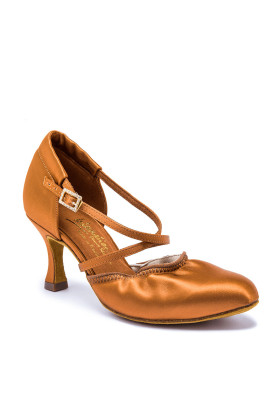
{Ballroom heels](https://www.dancewearchampions.ca/dance-shoes/ballroom-standard), especially shoes made for standard ballroom dances, are usually closed-toe and more structured. They are designed to create a clean, continuous line with a ballroom gown or smooth dance dress while offering steadiness for gliding dances such as waltz, tango, foxtrot, Viennese waltz, and quickstep.
Neither style is automatically better. A dancer attending a social salsa night may prefer an open Latin sandal, while someone taking a mixed ballroom class may need a closed-toe court shoe. Your training level, dance schedule, foot shape, and preferred heel height all matter.
Toe Style Changes How the Shoe Feels
The most visible difference is usually the toe.
Salsa heels commonly use an open-toe sandal design. The front may feature crisscross straps, a vamp that covers part of the toes, or several narrow straps. This styling allows the foot to point beautifully and can feel less confining for dancers who dislike pressure across the toes. It also suits the more exposed, Latin-inspired look many dancers want for salsa, bachata, cha-cha, rumba, and other club or social Latin styles.
Ballroom heels generally have a closed toe box. This gives the shoe a polished, formal appearance and provides more protection when dancing in a crowded class or in close hold with a partner. A closed toe can also help some dancers feel more secure through the front of the foot, particularly when they are still developing balance and technique.
That said, a closed toe should never feel cramped. Your toes need enough room to lie naturally without curling or pressing hard against the end of the shoe. Open-toe salsa heels should also fit closely. If the front straps are loose, the foot can slide forward, reducing control and making blisters more likely.
A note for social dancers
If you regularly dance salsa in busy venues, an open-toe shoe can leave your toes more exposed to accidental steps. This does not mean you must choose closed shoes, but it is a practical trade-off worth considering. Some social dancers keep both a Latin sandal and a closed practice or ballroom shoe in their dance bag.
Flexibility and Foot Action
Salsa dancing asks for rapid transfers of weight and active use of the ball of the foot. For that reason, salsa heels are often highly flexible. A flexible sole lets the dancer articulate the foot, point the toe, and respond quickly to fast musical changes.
Ballroom heels can also be flexible, but they often provide a more stable platform. Standard ballroom movement involves traveling smoothly across the floor, maintaining a long body line, and moving backward or forward in close partnership. A shoe with more structure can help the dancer feel grounded during those sustained movements.
Both categories commonly use a suede sole because it offers the right balance of slide and grip on a suitable dance floor. Suede allows turns without the abrupt stopping that can strain the knees. It does require care, though. Brushing the sole regularly helps remove dirt and restore traction.
Avoid treating dance shoes like street shoes. Wearing suede-soled heels outdoors can quickly damage the sole and bring grit onto the studio floor.
Heel Shape and Height Matter More Than Fashion
A higher heel changes your posture, weight placement, and visual line. It can lengthen the leg and create an elegant look, but it also requires more ankle stability and calf strength.
Salsa heels are frequently available in flared, slim, or Latin-style heel shapes. A flared heel has a wider base at the bottom and can feel more stable for beginners or dancers who want extra confidence during turns. A slimmer heel creates a more refined line but demands stronger balance and more precise weight placement.
Ballroom heels are often lower or more moderate in height, particularly for beginners, social dancers, and standard ballroom dancers. A court shoe with a broader, stable heel can make it easier to maintain balance while moving backward, traveling around the room, or dancing for a full evening.
Choose a heel height you can control, not simply one you admire. If you are new to dance heels, a lower heel with a stable base usually allows you to learn technique faster than a very high, narrow heel. More experienced dancers may choose a higher option for performances or competitions, but even advanced dancers benefit from a shoe that matches their conditioning and dance demands.
Straps, Fit, and Security
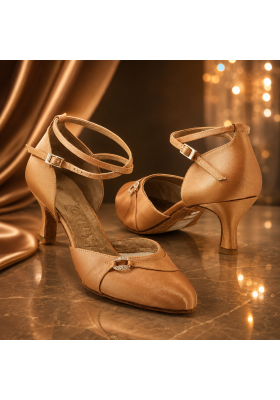
Salsa sandals often have ankle straps, T-bars, wrap straps, or adjustable buckles. These are not only decorative. They keep the heel from lifting away from the foot during spins, checks, and quick direction changes. The best strap placement feels secure without digging into the ankle or cutting across a sensitive part of the foot.
Ballroom court shoes may use a strap across the instep, around the ankle, or both. Because the shoe covers more of the foot, the fit should feel smooth and supportive from heel to toe. Your heel should stay seated in the back of the shoe without slipping, and the arch should feel supported rather than forced.
New dance shoes should fit snugly, especially if they are made from satin, leather, or a material that may soften with wear. They should not cause numbness, sharp pressure, or pain. A good fit is close and controlled, not punishing.
For dancers with wide feet, narrow heels, bunions, or different-sized feet, trying several styles can make a meaningful difference. A knowledgeable fitting is especially useful when selecting your first pair or moving from a low practice shoe into a higher heel.
Which Shoe Works for Each Dance?
A salsa heel is usually the natural starting point for salsa, bachata, cha-cha, rumba, and other Latin-focused social dancing. Its open design and flexible front support the foot action and styling common in these dances.
A ballroom heel is typically the stronger choice for waltz, tango, foxtrot, quickstep, and American smooth. The closed toe and more structured construction complement the movement quality and formal presentation of these styles.
The gray area is social dance. If your class rotates through salsa, swing, ballroom, and Latin dances, a comfortable practice shoe or versatile low-heeled ballroom shoe may be more useful than a highly specialized sandal. Teachers who spend long hours on their feet may also prioritize cushioning, stability, and durability over a dramatic heel.
For showcases and competitions, check any event rules and speak with your instructor if you are unsure. Costume, dance category, heel height expectations, and partner styling can all influence the right choice.
Make Your Choice Based on How You Dance
The right heel should let you focus on music and connection rather than on protecting your balance. If you mainly dance salsa and bachata, start with a secure, flexible Latin sandal in a heel height you can genuinely use. If standard ballroom is your focus, a closed-toe ballroom shoe will usually provide the steadier foundation you need.
If you dance both, owning two pairs is often the most practical answer. Your feet, your schedule, and your technique will tell you far more than a label on a shoe box. For dancers in the Toronto area who want help comparing fit, heel stability, and style in person, Dancewear Champions can make that decision feel much more straightforward.
Related Products
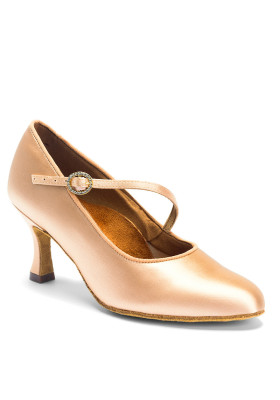
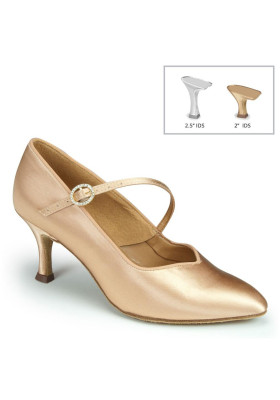
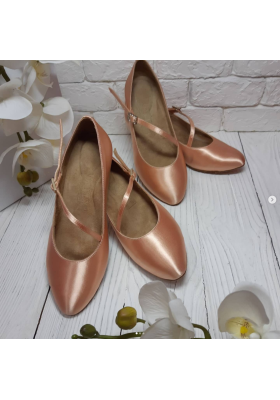
Galex - American Smooth
$212.50US
