


- 16 September, 2026
- 22
- 0
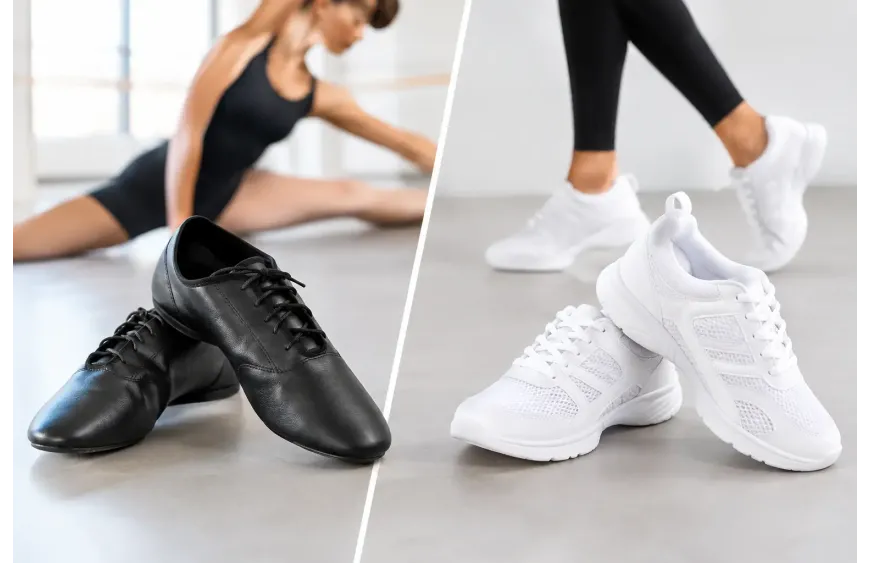
The first time a dancer tries a proper split-sole shoe after wearing street sneakers, the difference is immediate: turns stop feeling stuck. But practice shoes versus dance sneakers is not simply a question of which pair looks more athletic. The right choice depends on what you dance, the floor beneath you, how long you train, and whether you need one shoe for class, social dancing, teaching, or all three.
Both styles can be excellent everyday dance footwear. Neither automatically replaces a Latin heel, a ballroom standard shoe, or a competition shoe. Think of them as training tools with different strengths.
What Are Practice Shoes?
Practice shoes are purpose-built for dance training. Many ballroom and Latin practice styles have a flexible suede sole, a low stable heel or flat profile, and a secure lace-up, slip-on, or strap closure. They are designed to let dancers articulate through the foot, make controlled turns, and spend hours repeating patterns without the formality of a competition shoe.
For ballroom, American smooth, Latin, salsa, bachata, and teaching, a practice shoe often feels like the sensible middle ground. It provides more foot protection and structure than a performance sandal, while keeping the connection to the floor that dancers need to work on technique.
The sole is usually the defining feature. Suede offers controlled glide on an appropriate dance floor. It lets you pivot without excessive grip, while still giving more traction than a very slippery sole. Over time, the suede can be brushed to remove packed dirt and restore its surface.
Why dancers choose them for long sessions
A good practice shoe generally holds the foot more securely than a casual sneaker. That matters when you are working through a heel lead, settling into a Latin action, moving backward in standard, or drilling turns repeatedly. A close fit helps prevent the foot from sliding inside the shoe, which can interfere with balance and make the shoe feel less responsive.
Practice shoes also come in options suited to different needs. Some dancers prefer a low heel to maintain posture and prepare for social or competition footwear. Others choose a flat or very low profile for comfort, especially during group classes, teaching days, or lengthy practice sessions. The best height is the one you can use with control, not the one that looks most advanced.
What Makes a Dance Sneaker Different?
Dance sneakers are athletic-looking dance shoes with features designed for movement. Most have a split sole, flexible forefoot, cushioned construction, and a pivot area or smooth turning zone under the ball of the foot. They are popular for jazz, fitness dance, line dance, hip-hop-inspired classes, rehearsals, and dancers who want a softer, more casual feel.
Unlike ordinary running shoes, dance sneakers are made to move with the foot. A split sole allows more pointing and flexing through the arch. The turning area reduces the resistance that can make rotation uncomfortable in a standard gym shoe. Their cushioning can also feel welcome on harder floors or during classes with jumps, quick changes of direction, and extended standing.
That said, more cushioning is not always better for ballroom or Latin technique. A very padded sneaker can reduce your sense of the floor and make precise weight placement less clear. If you are learning to roll through the feet, use the inside edge, or feel a partner connection through the floor, a lighter practice shoe may provide more useful feedback.
Practice Shoes Versus Dance Sneakers: Key Differences
The most meaningful difference is not appearance. It is how each shoe manages friction, flexibility, and support.
Practice shoes commonly use a full suede sole or a dance-oriented sole that supports controlled travel and pivoting. They are often shaped more like traditional ballroom footwear, with a sleeker profile and less bulk between your foot and the floor. This makes them a strong choice for ballroom, Latin, social dancing, and partner-dance practice.
Dance sneakers typically have more shock absorption and a segmented sole. Their construction encourages mobility, particularly through the arch and forefoot, but may feel wider, higher, or more cushioned. They work especially well when the class includes energetic movement, when you are dancing on a hard surface, or when you prefer the look and comfort of a sneaker.
Neither sole should be treated like an outdoor sole. Gravel, wet sidewalks, salt, and rough concrete can damage suede and wear down pivot zones quickly. Change into your dance shoes once you arrive, and keep them in a dance bag when you leave.
Turning and floor grip
On a clean wood or studio floor, suede-soled practice shoes usually provide a predictable amount of slide. This is valuable for ballroom turns, Latin spins, and smooth traveling patterns. If the sole becomes too slick, brushing it can bring back traction. If it becomes too grippy, it may have collected dirt or moisture.
Dance sneakers can turn well when they have a dedicated pivot point, but the experience varies more by model and flooring. A rubber-heavy sole can catch on certain surfaces. For a cardio dance class that may not matter. For repeated pivots in salsa or ballroom, it can put extra twist through the knee if the sole does not release smoothly.
Support and foot feel
Choose a practice shoe when you want a closer-to-the-floor sensation and a secure, dance-specific fit. This can be especially helpful for adult beginners learning basic ballroom technique, as well as experienced dancers preparing for a showcase or competition where they will wear more traditional footwear.
Choose a dance sneaker when impact comfort, flexibility, and a casual athletic feel matter most. It can be a practical choice for youth rehearsals, dance fitness, jazz-based training, or dancers returning to class who want more cushioning while they rebuild stamina.
If you have a foot concern, ankle instability, or use prescribed orthotics, the answer may be more individual. Bring your orthotics when trying shoes where possible, and avoid forcing your foot into a narrow style just because it is popular. Proper length, width, and heel security matter more than the label on the shoe.
Match the Shoe to Your Dance Style
For ballroom standard and American smooth, many dancers prefer practice shoes because the suede sole and lower profile make it easier to feel rise and fall, backward movement, and floor pressure. A low-heeled practice shoe can also help dancers transition gradually toward their preferred standard or smooth shoe.
For Latin, salsa, and bachata, practice shoes are often the more versatile option for technique sessions and socials held on dance-friendly floors. They allow cleaner pivots and preserve the foot awareness needed for fast weight changes. A dance sneaker can still work for beginner classes or casual training, particularly if the floor is hard and your priority is comfort.
For dance fitness, jazz, and rehearsal-heavy choreography, dance sneakers often earn their place. Their cushioning and flexibility can reduce fatigue when the movement includes repeated directional changes. They are also a useful second pair for ballroom dancers who take multiple styles of class each week.
For teaching, consider the total number of hours you spend standing and demonstrating. A supportive low-heeled practice shoe may be ideal for partner work, while a dance sneaker can be more comfortable for high-energy group instruction. Some instructors keep both and choose according to the day’s class schedule.
Fit Matters More Than the Category
A shoe that is technically perfect for your dance style will still disappoint if it does not fit correctly. Your heel should stay seated without lifting excessively, the toes should not be compressed, and the ball of your foot should sit at the widest part of the shoe. Practice shoes should feel secure rather than loose, but they should not cause numbness or painful pressure.
Dance sneakers need attention too. Do not assume your everyday sneaker size will be correct. Dance shoe sizing can vary by brand, shape, and materials. Try both shoes, walk, point, bend through the feet, and make a few gentle turns on an appropriate surface. Notice whether your foot shifts sideways or your heel slips when you change direction.
For dancers in the Toronto and GTA area, a personal fitting at Dancewear Champions can be particularly helpful when you are choosing between styles or trying your first pair of dance-specific shoes. Seeing how the shoe responds on your own foot often answers questions that a product photo cannot.
Do You Need Both?
Many committed dancers eventually own both practice shoes and dance sneakers. That is not excess if each pair serves a different purpose. A suede-soled practice shoe can stay dedicated to ballroom, Latin, social dancing, and partner work, while a dance sneaker handles fitness classes, warm-ups, rehearsals, and harder surfaces.
If you are buying only one pair, start with your most frequent activity. A ballroom or Latin dancer attending regular partner classes will usually get more value from a proper practice shoe. A dancer whose week is mostly movement class, fitness dance, or jazz-based training may be happier in a dance sneaker.
The right pair should make you less aware of your feet in the frustrating sense and more aware of them in the useful, technical sense. When your shoe supports the way you actually dance, you can spend less energy managing grip or discomfort and more energy enjoying the next song.
Related Products
Sale
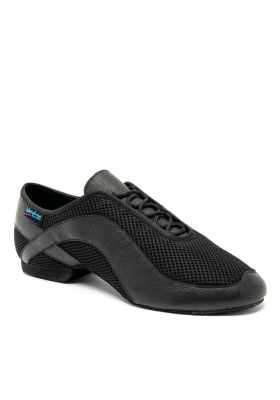
IDS - JAZZ - AIRMESH/BLACK
$168.30US $142.80US
Sale
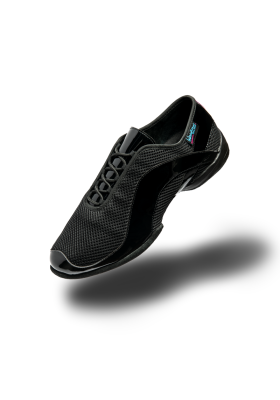
IDS - TEMPO - AIRMESH/BLACK PATENT
$194.65US $170.00US
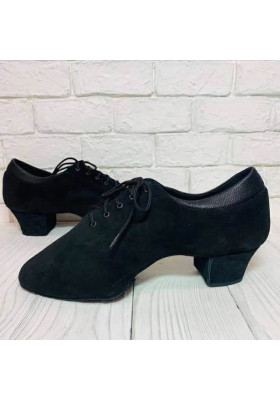
Galex - Black Nubuck - Heel 4cm
$191.25US
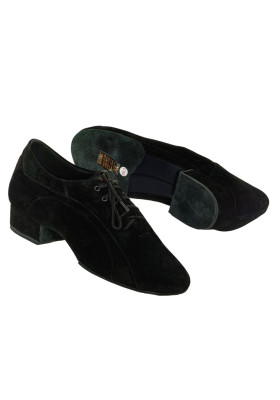
Galex - Black Nubuck - Heel 2cm
$191.25US

-280x400.webp "IDS - Heather Split-Sole - BluePinkPanther - 1.5\" heel")