


- 13 August, 2026
- 220
- 0
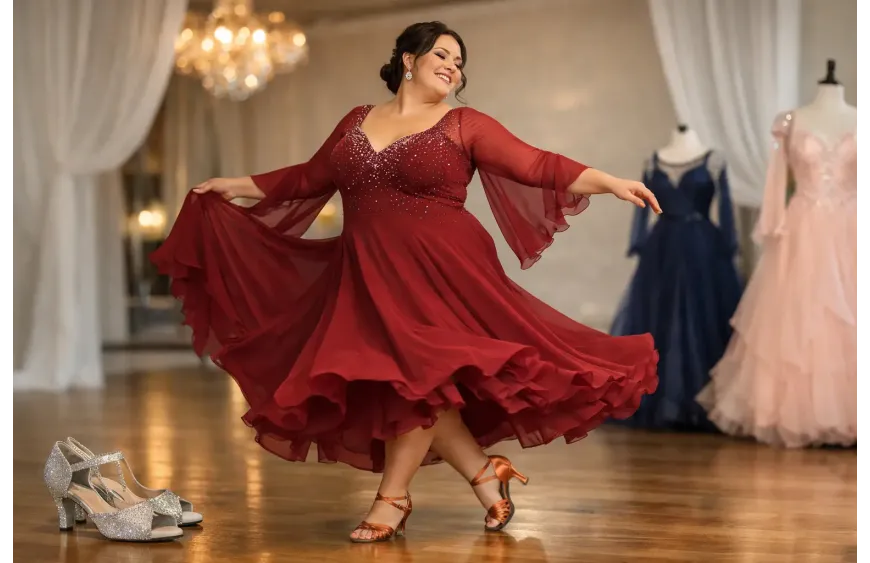
A ballroom dress should let you think about your frame, your timing, and your partner - not whether a strap is slipping or a skirt is pulling across your knees. The best plus size ballroom dresses are designed around movement first, then finished with the shape, color, and detail that make you feel ready to step onto the floor.
Whether you are beginning social ballroom classes, preparing for a showcase, teaching, or entering a DanceSport event, the right dress has a job to do. It needs to stay comfortable through turns, travel smoothly in hold, and give you the polished line that ballroom dancing is known for. Fit is not a minor detail. It is the starting point for confidence.
What Makes a Ballroom Dress Dance-Ready?
A dress that looks beautiful standing still is not always a good ballroom dress. Standard and smooth dancing ask for a garment that works with larger, continuous movement: rise and fall, pivots, shaping, promenades, and traveling patterns. The fabric should move with your body without feeling heavy, restrictive, or overly loose.
Look first at the bodice. A supportive, well-constructed bodice helps the dress remain secure as you lift your arms into frame and rotate through turns. Depending on your preference and body shape, that may mean wider straps, sleeves, a higher back, a wrap-style neckline, or a style with more coverage through the bust. A comfortable neckline is especially valuable during a long practice session or multiple rounds at an event.
The skirt changes the visual effect of every step. A flowing skirt can emphasize the sweep of a waltz or foxtrot, while layered chiffon or mesh adds softness and movement without making the dress bulky. For social dancing, a shorter or tea-length skirt may feel easier to manage. For showcases and competition, a longer ballroom silhouette can create more drama, provided the hem clears the floor and does not interfere with your footwork.
Choosing Plus Size Ballroom Dresses by Occasion
The right choice depends on where and how you dance. One dress does not need to cover every part of your dance life.
Practice and teaching
For regular lessons, teaching, or studio practice, prioritize stretch, washability, and ease. A dance dress with built-in coverage, a secure bodice, and a skirt that moves freely gives you a finished ballroom look without requiring a full costume. Black, deep jewel tones, and simple prints are practical choices because they transition easily from class to an evening social.
If you are building a practice wardrobe, consider how the dress works with your usual dance shoes and undergarments. You should be able to raise your arms, take a full stride backward, and spin comfortably before deciding it is the right fit.
Social dancing and dinner dances
A social dance dress can bring more personality into the equation. You may want sparkle, a brighter color, lace sleeves, an open back, or a fuller skirt. The trade-off is that decorative details should not snag easily, feel scratchy against the skin, or catch on a partner's clothing during close hold.
For a long social evening, comfort still wins. Choose a style you can sit in, move in, and wear for several dances in a row. A dress that makes you feel elegant but needs constant adjusting will quickly become distracting.
Showcases and competition
For performance, visual impact matters more. A ballroom gown may use flowing layers, rhinestone accents, floats, fringe, or dramatic sleeves to make movement visible from farther away. However, competition requirements can vary by age category, level, and event rules. Before choosing a dress for a sanctioned event, confirm what is permitted for your division.
A competition-ready look should also match your dance. Standard ballroom calls for a different silhouette and energy than Latin or rhythm. If you dance both, avoid assuming that one costume will deliver the same result in each style. A fuller, floating ballroom dress may be ideal for smooth traveling dances but feel cumbersome for faster Latin action.
Fit Details That Make the Difference
Size labels are only a starting point. Different brands use different measurements and proportions, which is why checking a garment size chart matters more than choosing the size you wear in everyday clothing. Take current measurements around the bust, waist, hips, and, when relevant, your torso length.
Pay attention to where the waistline sits. An empire waist can create a long, graceful line and offer ease through the midsection. A defined natural waist can provide more structure and highlight movement through the skirt. Neither is universally better. The best option is the one that lets you breathe, extend, and rotate without the dress shifting out of place.
Fabric choice matters, too. Stretch mesh, jersey, and dance knits can offer flexibility and a forgiving fit, while chiffon layers create float and lightness. Structured fabrics may deliver a more formal shape but usually provide less give. If you prefer more support, look for lined bodices, wider straps, or styles that work comfortably with your preferred bra.
Length deserves a real dance test. A long skirt should skim rather than drag. Bring or wear the heel height you normally dance in when assessing hem length, because a dress that is perfect in flats may become a tripping hazard in ballroom shoes. You should be able to step back, turn, and collect your feet without catching the fabric.
How to Find a Style That Feels Like You
It is easy to focus on rules about what you are supposed to wear, particularly when stepping into ballroom for the first time. Start instead with the features that help you feel secure. Some dancers prefer sleeves or higher necklines. Others feel most confident in a wrap bodice, a V-neck, or a dress with an open shoulder line. Your comfort is part of your presentation.
Color can guide the choice as well. Rich blues, reds, emeralds, purples, and black are dependable for ballroom because they read clearly under studio and event lighting. Lighter shades can look beautiful but may require more attention to lining and undergarments. If you are unsure, choose a color you already enjoy wearing. Confidence tends to show up in posture before it shows up in photos.
Details should support your goal rather than compete with it. A simple dress can be refined and versatile, especially for lessons and socials. More elaborate embellishment makes sense when you are performing under lights or building a distinct showcase look. There is room for both in a dancer's wardrobe.
Shop With Movement in Mind
When trying on ballroom dresses, do more than stand in front of a mirror. Lift your arms into dance position. Take a side step. Rotate both directions. Sit down, then stand back up. If possible, do a few slow turns in the shoes you plan to wear. These small checks reveal whether the dress stays in place and whether the skirt has the freedom your dancing needs.
If you are shopping online, compare your measurements with the size chart and read the garment description for fabric, stretch, lining, and length details. If you are between sizes, the best choice depends on the fabric and cut. A highly structured style may need more room, while a stretch dance dress may fit comfortably closer to the body. When in doubt, personalized fit guidance can prevent the frustration of ordering a dress that looks right but does not feel right on the floor.
For dancers in the Toronto and GTA area, Dancewear Champions offers a personal shopping experience where you can discuss the dance style, occasion, coverage preferences, and fit concerns that shape a good choice. That kind of focused guidance is useful whether you need a first social dress or a more polished garment for an upcoming performance.
The right ballroom dress does not ask you to dance around it. It follows your movement, supports your presence, and lets the room see what you came to do.