


- 05 October, 2026
- 8
- 0
-870x563.webp "A Latin Dress Fitting Example That Moves Well")
A Latin dress can look perfect on a hanger and still feel wrong the moment you take a rumba walk. That is why a useful latin dress fitting example starts with movement, not just measurements. The right dress should support the dancer, keep its intended lines, and let the body create the action without constant pulling, adjusting, or worrying about coverage.
For Latin, salsa, bachata, and competition dancing, fit is part of performance. A dress that stays secure through turns, settles properly after a spin, and moves with the hips gives a dancer one less thing to think about on the floor.
What a Proper Latin Dress Fit Should Do
Latin dresses are designed differently from ballroom gowns and everyday occasion wear. They often use stretch fabrics, fitted bodices, open backs, asymmetrical skirts, mesh panels, fringe, stones, or draping. Each detail needs to sit in the correct place before it can do its job visually.
A well-fitting Latin dress should feel close to the body without restricting rib expansion or hip action. The bodice should remain secure when the dancer raises her arms. The waist should sit where the design intends, rather than creeping upward during movement. At the hips, the dress should skim and move, not pull tightly across the seat or twist to one side.
Fit should never be judged only while standing straight. Latin dance is full of rotation, settling action, leg lines, arm styling, and sharp changes of direction. The dress needs to work with all of it.
Latin Dress Fitting Example: A Practical Walk-Through
Imagine a dancer trying on a fitted black Latin dress with a high neckline, mesh sleeves, an open back, and fringe placed across one hip. Standing still, the dress appears smooth through the torso. The real fitting begins when she starts moving.
Step 1: Check the bodice before the details
First, ask the dancer to lift both arms, lower them, and repeat the movement several times. The neckline should return to its original position. If it shifts forward, gaps at the chest, or pulls against the neck, the bodice may be too large, too long, or incorrectly shaped for her torso.
Next, have her take a full breath. A dress should feel secure at the ribs, but it should not make breathing shallow. This matters especially during a long practice session, a showcase, or multiple competition rounds. If the fabric digs in while standing still, it will usually become more distracting once the dancing begins.
For styles with built-in cups, check that the cups sit at the natural bust point. Cups that sit too high can flatten or push the dress upward. Cups that sit too low can leave the neckline unsupported, even if the dress technically feels tight enough.
Step 2: Test the waist and hip line in basic actions
Now let the dancer take a few rumba walks, perform a Cuban motion exercise, and rotate through a simple cha-cha lock step. Watch what happens at the waist. The dress should stay anchored rather than riding up toward the ribs.
In this fitting example, the fringe is meant to begin at the right hip. After several actions, it should still frame the hip rather than turning toward the front or back. If the entire dress rotates around the body, the issue may be a loose fit through the torso, uneven straps, or a style that does not match the dancer's proportions.
A close fit at the hip is normal in many Latin designs, but there is a difference between fitted and strained. Horizontal pulling lines across the hips, seat, or lower abdomen indicate that the fabric is under too much tension. Sizing up may help, although some dresses will still need a different cut to suit the dancer's shape.
Step 3: Make sure the skirt creates movement, not obstacles
Latin skirts vary widely. A short circular skirt, layered ruffle, asymmetric panel, slit, or fringe hem can all look exciting on the floor, but each one has a different fitting consideration.
Ask the dancer to take a forward step, a back step, and a side step with full leg extension. She should be able to reach her normal stride without catching the skirt, exposing areas she does not want exposed, or feeling fabric pull at the inner thigh. Then have her turn. The skirt should open and settle naturally.
For a dress with fringe, look at the movement from the front, side, and back. Fringe should respond to hip action, not hang in a tangled clump. Very long fringe can create dramatic movement, but it may be less practical for a newer dancer or for a fast jive routine. A shorter fringe placement may provide a cleaner line and require less adjustment.
Step 4: Check the back while the dancer is moving
Open-back Latin dresses deserve a dedicated check. The back edge should lie flat against the body without gaping, rolling, or pulling away during turns. Have the dancer reach forward as if taking a partner connection, then rotate her upper body to both sides.
If the back gaps when she moves, the dress may be too wide through the upper body. If it pulls sharply across the shoulder blades, it may be too narrow or too short in the torso. A dress can fit beautifully through the hips and still be the wrong choice if the upper back does not stay secure.
This is also the moment to check undergarment planning. Many Latin dresses have built-in support or are designed to be worn with specific dance undergarments. The garment should be tried on as close as possible to how it will be worn for practice, a showcase, or competition.
Fit Changes Depending on How You Will Dance
There is no single perfect fit for every Latin dress because the dancer's purpose matters. A dress for social salsa may prioritize comfort, easy care, and a little more coverage. A showcase dress may include bolder fringe, stones, or cutouts because it will be worn for a shorter performance. A competition dress needs to stay reliable over warm-up, rounds, waiting time, and repeated full-out dancing.
For practice, many dancers prefer a Latin skirt and fitted top, a bodysuit with a skirt, or a simple practice dress. These options allow teachers and partners to see body action while giving the dancer freedom to train. For competition, the visual placement of every feature becomes more important. The dress should enhance the dancer's lines, not distract from them.
Youth and juvenile dancers need particular attention to comfort, security, and appropriate coverage. A young dancer should be able to move independently, use the restroom without unnecessary difficulty, and focus on the routine rather than managing her costume. Parents should check the fit in dance shoes, not bare feet, since posture and leg line change once heels are on.
Common Signs the Dress Is Not the Right Fit
A dress does not need to be painful to be wrong. Frequent adjustments are often the clearest warning sign. If a dancer keeps pulling down the hem, lifting the neckline, repositioning straps, or smoothing the hips after every figure, the dress is asking for attention it should not need.
Watch for straps that fall off the shoulder, mesh that pinches at the underarm, a zipper that buckles, rhinestone sections that pull, or a skirt that twists after turns. Also pay attention to confidence. Sometimes a dress technically fits but makes the dancer hesitate to use full movement. A different neckline, hem length, sleeve style, or back design may be the better choice.
The best size is not always the one the dancer expects to wear in regular clothing. Dancewear sizing varies by brand, fabric stretch, and garment construction. Measurements and size charts provide a starting point, but a movement check gives the final answer.
Bring the Right Items to a Fitting
For the most accurate result, try on a Latin dress with the dance shoes and undergarments planned for the event. Bring hair accessories or a hair tie if the neckline or back design may interact with long hair. If possible, move in a clear area where you can take real dance steps rather than only turning in front of a mirror.
A personal fitting is especially helpful when choosing a first competition dress, fitting a youth dancer, or deciding between two styles that feel different on the body. At Dancewear Champions in Thornhill, dancers can receive knowledgeable guidance on dress fit alongside the shoes, accessories, and practicewear that complete the look.
A Latin dress should make movement feel more visible, not more difficult. When the bodice stays secure, the skirt responds to the music, and the dancer can give a full turn without checking the mirror afterward, the fit is doing exactly what it should.
Tags latin dress, latin practice dress, latin dress, latin showcases dress, latin competition dress,
Related Products
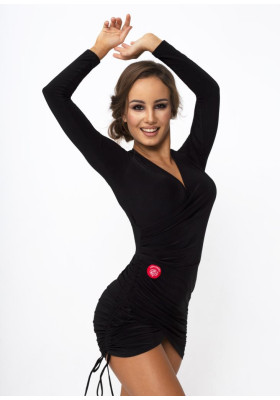
Latin Dress 19 Black
$216.75US
Sale
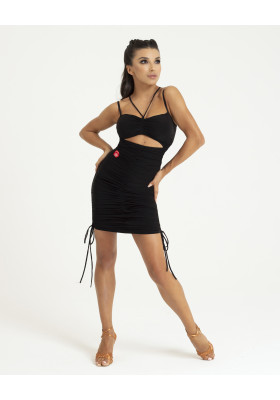
Latin Dress 22
$250.75US $212.50US
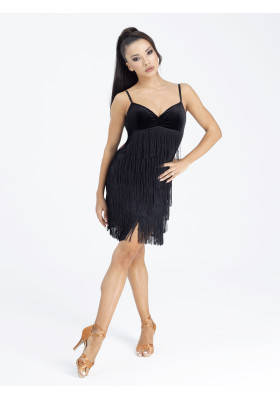
Latin Dress 14
$280.50US
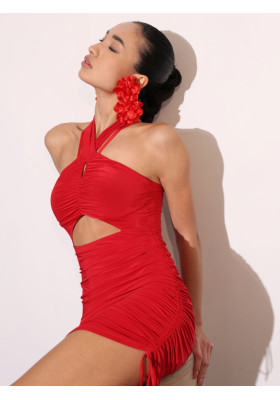
Latin Dress 03
$297.50US

Latin Dress 18 Blue
$297.50US
-280x400.jpg "Latin Dress 11 P - IDEALE")
Latin Dress 11 P - IDEALE
$255.00US
-280x400.webp "Latin Dress 58")
Latin Dress 58
$263.50US