


- 27 October, 2026
- 3
- 0
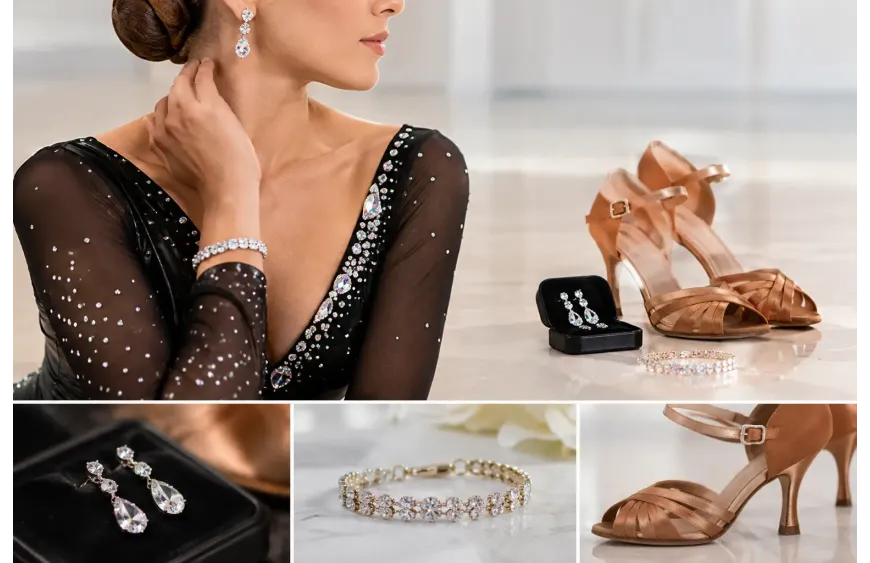
A sparkling earring on the floor is more than a distraction. It can catch under a heel, interrupt a performance, or leave you adjusting your look instead of focusing on your frame, timing, and connection. Knowing how to secure ballroom jewelry gives you the polished finish of competition styling without worrying that every turn, spin, or quick change will loosen a piece.
Ballroom and Latin jewelry must do more than look beautiful under lights. It needs to stay comfortable through movement, perspiration, costume changes, and close partner work. The right method depends on the item, your hairstyle, your costume neckline, and whether you are dressing for social dance, a showcase, or a DanceSport event.
Start With Jewelry Made for Movement
The easiest way to keep jewelry secure is to choose pieces designed with dance in mind. Lightweight rhinestone earrings, close-fitting necklaces, and flexible bracelets are usually more practical than heavy fashion jewelry. A piece that feels secure while standing still may shift quickly during a fast Latin routine or when moving through a Standard frame.
Before wearing any item, check its clasp, stones, settings, and metal loops in bright light. Tighten screw-back earrings, inspect jump rings, and make sure a bracelet clasp closes fully. If a rhinestone is already loose or a clasp opens with gentle pressure, repair or replace the piece before performance day. Trying to rescue damaged jewelry with tape at the venue is rarely reliable.
Think about the costume as well. A high-neck ballroom gown may make a necklace unnecessary, while a Latin dress with an open neckline can benefit from a secure choker or pendant. Jewelry should enhance the line of the dress rather than compete with it or create a snag point for your partner's hand.
How to Secure Ballroom Jewelry by Type
Each category needs a slightly different approach. Test your complete look during a full practice run, not just in front of a mirror.
Keep earrings from slipping or swinging
Studs and compact drop earrings tend to be the safest options for dancing. For pierced ears, use quality backs that fit the earring post firmly. Silicone comfort backs can add grip, while screw backs provide added security for valuable or heavier pieces. If you use traditional butterfly backs, bring a spare pair in your dance bag.
For larger rhinestone earrings, place the earring after makeup and hairspray are complete. Hair products can make the skin and earring area slippery. Make sure the earring does not catch in curls, hair extensions, or a rhinestone hair accessory when you turn your head.
Clip-on earrings can work well for dancers without pierced ears, but they need a comfort test. Add soft clip-on cushions if needed, then practice with head movements and turns. Do not overtighten clips to the point of pain. Numb or sore ears will distract you long before the music ends.
Secure necklaces against shifting
Necklaces should sit close enough to the body that they do not bounce, rotate, or slide behind a costume strap. A choker, collar necklace, or short pendant is often easier to manage than a long chain. If your costume has a low back, check that the clasp will not rub against exposed skin or catch on fabric.
For a necklace that shifts slightly at the sides, fashion tape made for skin and fabric can help hold the chain or pendant in place. Use only a small amount, apply it to clean, dry skin, and test it well ahead of an event. Some dancers have sensitive skin, especially after shaving, tanning, or using body makeup, so a patch test is wise.
Avoid attaching jewelry with ordinary household tape. It can show under lights, lose adhesion with perspiration, and leave residue on fabric. If a necklace is constantly moving despite proper tape and fit, choose a shorter style or skip it. A clean neckline looks more professional than a beautiful piece you keep touching.
Stop bracelets from traveling up the arm
Bracelets need special attention because they can interfere with arm styling, sleeves, and partner connection. A close-fitting cuff or stretch rhinestone bracelet usually stays put better than a loose bangle. You should be able to fully extend and shape your arms without the bracelet sliding toward your hand.
If your costume has wrist cuffs, consider whether a bracelet is necessary at all. A heavily stoned cuff can provide the same visual impact with less movement. For a bracelet with a clasp, position the clasp on the inside of the wrist, where it is less visible and less likely to catch.
Many dancers use a small piece of body-safe fashion tape beneath a bracelet for a showcase or competition. This can be effective, but it is not a replacement for correct sizing. Tape should stabilize a well-fitted piece, not hold up a bracelet that is too large.
Make rings and brooches practical
Rings can look elegant, especially for social dancing or a formal showcase, but large raised settings may catch on gloves, costume mesh, or a partner's clothing. Choose smooth, secure rings and remove anything that feels loose. If you wear rings while dancing with a partner, consider their comfort as well.
Brooches and decorative pins deserve a double check. Use a locking pin back whenever possible, and place the pin through a stable portion of the costume rather than fragile stretch mesh. For additional security, sew a small thread loop around the pin mechanism on the inside of the garment. It is more discreet and dependable than relying on a safety pin alone.
Use Dance-Safe Adhesives Carefully
Body adhesive and fashion tape can be useful tools, particularly for necklaces, cuffs, decorative body jewelry, and costume pieces. They work best when skin is clean, dry, and free from lotion, oil, tanning products, or body shimmer. Apply adhesive before getting dressed if possible, so you can position the item calmly without stretching the costume.
Adhesive has limits. Heat, perspiration, and repeated movement can weaken it, especially during a long competition day. Always pack extras, along with cotton swabs and a small cloth for cleanup. If you have a history of skin sensitivity, avoid trying a new adhesive for the first time on competition morning.
Never use adhesive near the eyes, on irritated skin, or on areas where it could pull delicate skin when removed. For earrings and hair accessories, choose the correct backing or fastening method instead of attempting to glue them to the skin.
Check Jewelry Against Hair, Costumes, and Partner Work
Security is not just about the clasp. Jewelry can become loose because another part of the look catches it. Before you leave for the venue, move through your hair styling, costume, and jewelry in the order you will use on event day. Turn your head, lift your arms, take a closed dance hold, and practice a few full rotations.
For Standard and Smooth dancers, check necklaces and earrings in closed hold. An earring that hangs too low can brush a partner's cheek, while a necklace may twist when the upper body stretches through shaping. Latin and rhythm dancers should test sharp head actions, spins, arm lines, and floor work if their choreography includes it.
Also consider quick changes. If you have more than one number, organize jewelry in separate labeled pouches with the matching costume. A small pouch for each look prevents tangling and makes it much less likely that a missing earring turns up at the bottom of your bag five minutes before you dance.
Build a Small Jewelry Emergency Kit
A compact kit can save a performance. Keep spare earring backs, fashion tape, a small sewing kit, clear thread, a few safety pins, a polishing cloth, and a secure jewelry case in your dance bag. If you wear clip-ons, add spare cushions. If a costume uses decorative stones or jewelry appliques, carry a few matching replacement stones and suitable adhesive for fabric repairs.
Use safety pins for a temporary costume fix, not as the primary fastening method for jewelry touching the skin. Pins can open, shift, or damage delicate fabrics. When an item needs more than a simple repair, it is usually better to choose a backup piece that you know will stay secure.
Give Yourself a Final Movement Test
Put on your shoes, costume, and jewelry before leaving for a showcase, social, or competition. Then move. Raise your arms, turn both directions, take your dance hold, and practice the actions that place the most stress on each piece. Ask your partner, coach, or a family member to look for twisting chains, visible tape, open clasps, and earrings hidden in your hair.
Competition rules can also vary by division and event, particularly for youth dancers, so confirm what is permitted before choosing heavily embellished jewelry. The goal is always a finished, appropriate look that supports your dancing.
Well-secured jewelry should disappear from your mind once the music begins. Choose comfortable pieces, test them in motion, and keep a few smart backups close by so your attention stays exactly where it belongs: on the dance.
Tags Jewelry for Every Dance, jewelry for practices, jewelry for showcases, jewelry for competition