


- 11 October, 2026
- 14
- 0
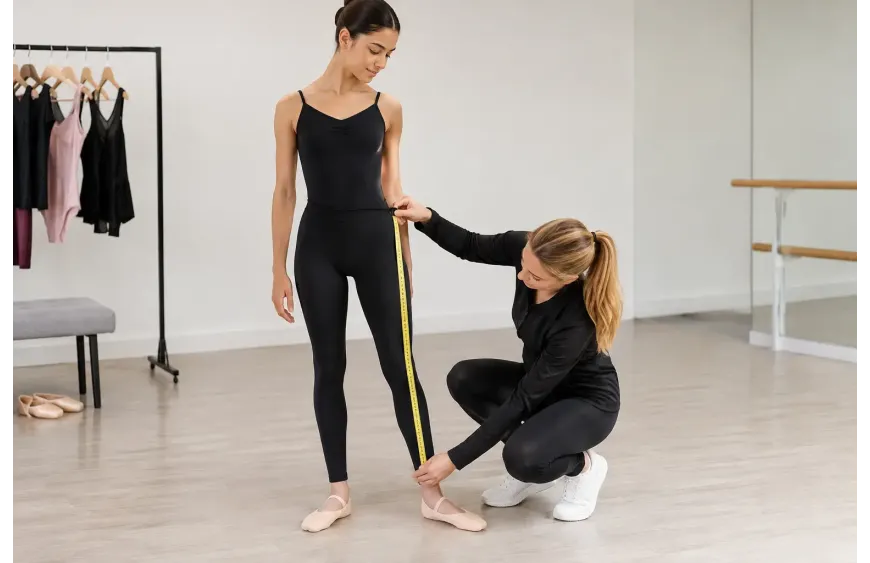
A dance pant can fit beautifully at the waist and still look wrong the moment you take a step. A hem that catches under a heel, exposes too much ankle, or bunches at the shoe changes both comfort and presentation. Knowing how to measure dance inseam helps you choose practice pants, ballroom trousers, leggings, and youth dancewear with movement in mind - not just a number on a size chart.
The inseam is especially relevant for dancers because the correct length depends on the garment’s cut, the dance shoes you will wear, and how the fabric behaves while moving. A ballroom trouser, for example, needs a different finish than a close-fitting Latin practice legging.
What Is a Dance Inseam?
An inseam is the measurement from the crotch seam down the inside of the leg to the intended hem. It is not the same as your overall pant length. Two dancers with the same height can need different inseams because of their torso-to-leg proportions, posture, and preferred shoe heel height.
For dancewear, the intended hem matters just as much as the measurement itself. Wide-leg ballroom pants may finish close to the floor when you are standing in dance shoes. Men’s ballroom trousers generally need enough length to maintain a clean line over the shoe without dragging. Slim practice pants and leggings may end at the ankle, above the ankle, or at the foot depending on the style.
Always read a garment’s description and size chart before assuming that a listed inseam will fit like your favorite pair of everyday pants. Dance apparel may be designed with a higher waist, a stretch waistband, a flared leg, or a longer silhouette for performance.
How to Measure Dance Inseam at Home
Use a flexible measuring tape, wear close-fitting dance clothing or leggings, and stand naturally. The best results come from having someone measure you, particularly if you are measuring for long ballroom pants or competition trousers.
Put on the dance shoes you expect to wear with the garment. This is the detail most often missed. Even a modest heel changes where a hem falls, while ballroom shoes, Latin shoes, and practice shoes can have different sole thicknesses and heel shapes.
Start the tape at the point where the inseams meet at the crotch. Run it down the inside of the leg, keeping the tape lightly against the body rather than pulling it tight. Stop at the hem position needed for that garment. Record the measurement in inches or centimeters, then use the same unit shown on the size chart.
If you are measuring yourself, a well-fitting pair of dance pants can provide a useful reference. Lay the pants flat, smooth the inside leg without stretching it, and measure from the crotch seam to the hem. This method is useful for comparing one garment to another, although a body measurement is better when trying a new cut or brand.
Measure in Your Dance Shoes, Not Barefoot
Barefoot inseams can be useful for leggings, ballet warm-ups, or casual joggers, but they can be misleading for ballroom and Latin pants. A hem that looks ideal barefoot may sit too high once you add a heel. Conversely, a pant measured for a higher heel can pool around a lower practice shoe.
If you regularly switch between heel heights, measure for the shoes you wear most often. For a competition outfit, measure with the exact competition shoes whenever possible. A small difference becomes much more noticeable under bright lights and during traveling figures.
Keep Your Posture Natural
Do not point your toes, bend one knee, or stand unusually tall. Place your feet about hip-width apart and let your weight settle evenly. Dance posture is lifted, but it should not force your hips into an artificial position while measuring.
For children, have them stand still in their usual dance shoes and repeat the measurement once. Young dancers may shift their weight, and a second measurement helps confirm the number before ordering a juvenile competition outfit or practice pants.
Choose the Right Hem for Your Dance Style
The same inseam is not automatically right for every discipline. Consider the silhouette your garment is meant to create.
Ballroom and American Smooth Pants
Ballroom pants are usually cut to create a long, uninterrupted leg line. For ladies’ wide-leg pants, the hem often falls close to the floor in dance shoes, while still clearing the ground during a step. The fabric should not catch under the heel when you move backward or pivot.
For men’s trousers, the front generally rests neatly on the shoe with a controlled break, while the back sits low enough to look balanced without touching the floor. The exact amount of break is partly a style preference, but excess length can look untidy and become a tripping risk.
Test the planned length by taking a few natural walking steps, stepping backward, and making a small turn. A pant that only looks correct while standing still may be too long for dancing.
Latin, Salsa, and Bachata Practice Wear
Latin and social dance pants are often narrower through the leg or made from stretch fabric. A tapered pant may finish at the ankle or slightly below it, while a bootcut style may be longer to work with a dance shoe. The goal is freedom of movement and a sharp, intentional line rather than one universal hem length.
For leggings, stirrup styles, and footed dancewear, measure according to the manufacturer’s size chart rather than trying to add length. Stretch fabrics can accommodate a range of inseams, but too much tension may pull the waistband down or make the garment feel restrictive through the hips.
Ballet, Warm-Up, and Youth Dancewear
Ballet warm-up pants and joggers are commonly designed to sit above the shoe or gather at the ankle. In these styles, a full-length inseam may not be the deciding measurement. Waist, hip, and rise can matter more, especially for growing dancers.
Parents buying for a child should avoid adding several inches “to grow into” if the garment could interfere with footwork. A small amount of growing room may be practical in a relaxed warm-up pant, but a long hem is not a good trade-off for safety or clean technique.
Compare Your Measurement With the Size Chart
Once you have your inseam, compare it with the garment’s listed measurements alongside waist and hip measurements. Do not select a size based on inseam alone. A longer size may solve the length issue but become loose through the waist, seat, or thigh, which can change how the garment moves.
Also check whether the listed number is a body inseam recommendation or the finished inseam of the garment. A body measurement tells you which size range is expected to fit. A finished inseam tells you how long the actual pant leg is. Those are different measurements, and the distinction is particularly useful when shopping for flared pants, men’s trousers, or styles with a fold-over waistband.
If you fall between sizes, the right choice depends on fabric and cut. Stretch dancewear may allow you to choose the size that best matches your waist and hips, then make a minor hem adjustment if needed. Structured trousers may require more careful fitting through the seat and thigh first, since length is usually easier to alter than overall shape.
Common Dance Inseam Mistakes
Measuring over loose jeans or sweatpants adds bulk and makes it hard to find the true crotch point. Measuring from the waistband rather than the crotch seam creates an outseam measurement, not an inseam. Both can lead to an incorrect order.
Another common mistake is measuring one leg while standing unevenly. Keep the tape straight along the inside leg, but do not force it into every contour. The goal is a practical garment length, not a tape pulled as tightly as possible.
Finally, do not assume that every long pant should touch the floor. A hem that brushes the floor during a posed photo may catch during a heel lead, a spin, or a quick Latin weight change. Movement is the final fit test.
When Alterations Are Worth Considering
A small hem adjustment can make a quality dance garment feel custom fitted. This is often worthwhile for ballroom trousers, wide-leg practice pants, and competition pieces where proportion matters. Bring the shoes you will actually wear to the alteration appointment, and ask to move through a few dance positions before the hem is finalized.
Avoid cutting fabric before you have tested the garment with your dance shoes. Some stretch styles, mesh hems, embellished pants, and specialty finishes need an experienced alteration approach to preserve the original look.
At Dancewear Champions, dancers and families can get fit guidance for the style they are considering, whether the goal is a polished ballroom line, comfortable teaching wear, or reliable youth practice clothing. A careful inseam measurement gives you a strong starting point, but the best dance fit is the one that still looks right when the music starts.
Tags dance pants, Latin Practice Wear, Salsa Practice Wear, Bachata Practice Wear, footed dancewear, Ballet warm-up pants, dance shoes