


- 27 October, 2026
- 13
- 0
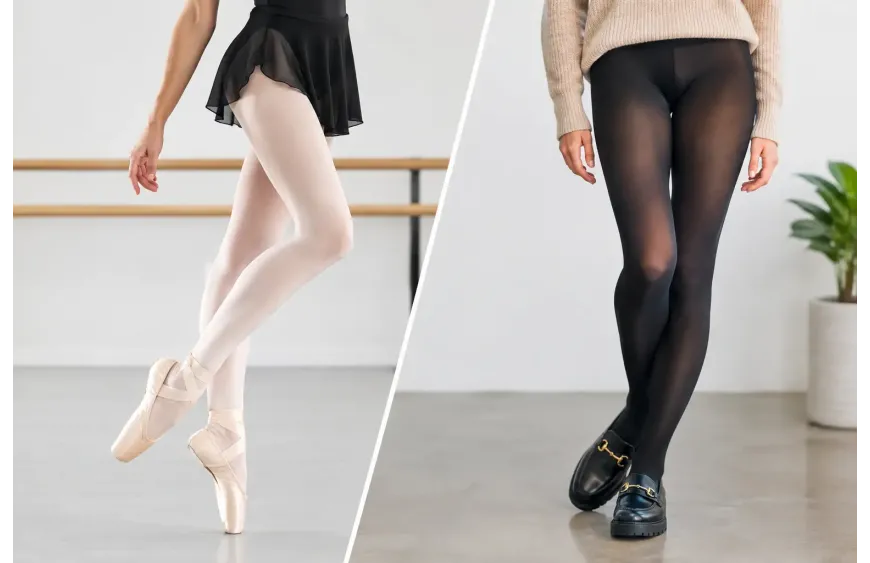
A pair of tights can look fine while standing at the mirror and become a distraction the moment you plié, take a long Latin step, or lift your arms for a ballroom frame. That is why the choice between dance tights versus regular tights matters more than many new dancers expect. Both cover the leg, but they are made for very different jobs.
Regular tights are designed primarily for everyday outfits. Dance tights are designed to move, stretch, recover, withstand friction, and look polished under studio lights or on a competition floor. For ballet class, a youth recital, a Latin showcase, or a long day of teaching, that difference is felt in the fit as much as it is seen in the finish.
Dance Tights Versus Regular Tights: What Changes?
The biggest difference is fabric performance. Dance tights usually contain a higher proportion of stretch fiber and are knit to move repeatedly with the body. A dancer needs fabric that follows a deep bend of the knee, a pointed foot, a lunge, or a high extension without pulling at the waistband or becoming see-through across the thigh.
Regular fashion tights may have some stretch, but they are often intended for walking, sitting, and light daily wear. Their knit can become strained during rehearsal, especially around the knees, hips, and seat. Once that happens, the tights may bag, twist, sag, or develop a run much sooner than expected.
Opacity is another practical distinction. Many dance tights are made to create an even, stage-ready leg line. They help conceal minor skin variations while still allowing the leg to look natural and elongated. Regular tights can vary widely in coverage, even within the same color name. A pair that looks opaque indoors may appear patchy or shiny under strong stage lighting.
For dancers, a consistent finish also supports the overall costume or class uniform. Ballet tights may be soft pink, tan, espresso, or another shade selected to suit the dancer and studio requirements. Ballroom and Latin dancers may prefer skin-tone, tan, or fishnet styles that complement their shoes and costume. The right shade should enhance the line of the leg rather than compete with it.
Why Construction Matters on the Dance Floor
Dance tights are not simply thicker regular tights. Their construction is usually more considered for movement and presentation. Many have a comfortable, supportive waistband that stays in place without rolling. Others use a gusset or reinforced panel through the body, where dancers need more mobility and durability.
Foot construction matters, too. Convertible tights have an opening under the foot, allowing a ballet dancer to move between bare feet and coverage without removing the tights. Stirrup tights leave the heel and ball of the foot open while keeping coverage along the leg, which can work well for some practice settings. Footed tights create an uninterrupted line from waist to toe and remain a classic choice for ballet, jazz, and formal performance looks.
For ballroom, Latin, salsa, and social dance, footed tights are not always the best choice. Dance shoes need a secure, direct fit against the foot. A footed tight inside a closed shoe can change the fit, encourage slipping, or make the shoe feel tighter. Many dancers instead choose footless styles, stirrups, or purpose-made fishnets depending on their footwear, costume, and the rules of the event.
A good pair should also recover after movement. If the knees stay stretched out after one rehearsal or the waistband slides down during turns, the tights are not doing their job. This is particularly relevant for children, who may spend a full class moving from floor work to leaps, as well as adult dancers attending several classes, practice sessions, or social events each week.
The Right Tights Depend on the Dance Style
There is no single best tight for every dancer. The correct pair depends on what you are dancing, what shoes you wear, and whether the setting is class, practice, performance, or competition.
Ballet, jazz, and youth dance classes
For ballet, studio requirements often guide the decision. Footed tights in a specified color are common, particularly for younger dancers and formal ballet classes. Convertible tights can be especially useful for older ballet students who need to adjust their footwear during the day or use foot pads, toe pads, or other accessories.
For jazz and contemporary, the decision may be more flexible. Footless tights can work well with bare feet or jazz shoes, while convertible styles offer versatility. Parents buying for growing dancers should prioritize a smooth fit over buying excessively large. Tights that bunch at the ankle or sag at the seat can interfere with the clean line teachers need to see.
Ballroom, Latin, salsa, and bachata
Ballroom and Latin dancewear calls for a different approach. In Standard or American Smooth, dancers often want a clean, refined leg finish that works with a longer skirt or formal dress. In Latin, salsa, and bachata, the leg is often more visible, and the tights may become part of the costume presentation.
Fishnet dance tights are popular because they can be durable, flattering, and less prone to visible runs than sheer fashion hosiery. The best dance fishnets are usually designed with stretch and a secure waistband, rather than the delicate feel of a fashion pair. Their texture can also create a polished look under lights, particularly when matched thoughtfully to skin tone and dance shoes.
That said, fishnets are not mandatory. A smooth, matte dance tight may be a better choice for a more understated practice outfit, a teaching setting, or a costume that already has substantial sparkle and detail. The goal is balance: the tights should support the overall look while allowing you to move with confidence.
Fit Is More Important Than the Label Size
Tights that are too small are likely to pull, become transparent, and wear out quickly. Tights that are too large can wrinkle behind the knees, slide at the waist, and look loose through the ankle. This is why height, weight range, torso length, and preferred compression all matter when selecting a size.
A dancer with a long torso may find that a pair fitting the legs still feels short through the body. In that case, moving up a size can be more comfortable, provided the legs remain smooth. For plus-size dancers, seek tights made with inclusive proportions rather than relying on an overly stretched standard size. A better pattern and a comfortable waistband make a noticeable difference during long rehearsals and events.
When trying on tights, move in them before removing the tags. Bend the knees, lift one leg, reach overhead, and take a few side steps. Check whether the waistband stays level and whether the fabric remains opaque through the seat and thigh. If you plan to wear them with dance shoes, test the complete combination whenever possible.
When Regular Tights Can Still Work
Regular tights are not useless for dancers. They can be suitable for a short social event, a costume look that requires a particular fashion texture, or an occasional outfit where high mobility is not expected. They may also work as a temporary backup when your dance pair is unavailable.
The trade-off is durability and reliability. A fashion tight may feel acceptable for dinner before a dance event but fail during a crowded social, a full rehearsal, or a performance with quick changes. If movement, camera visibility, or costume polish matters, dance-specific tights are the safer choice.
Avoid judging by denier alone. A higher denier can mean a more opaque tight, but it does not automatically mean better stretch, stronger seams, or a dance-friendly waistband. Read the intended use, examine the foot style, and consider how the fabric will work with your shoes.
Care That Helps Tights Last Longer
Even well-made dance tights need careful handling. Put them on slowly, gathering the fabric from the toe or ankle upward instead of pulling from the waistband. Remove rings and check for rough nails before dressing, since tiny snags can become runs.
Hand washing in cool water is the gentlest option. If machine washing is necessary, use a mesh bag and a delicate cycle. Avoid high heat, which can weaken elastic fibers and reduce the recovery that keeps tights fitting close to the body. Let them air dry, and keep a spare pair in your dance bag before a competition, recital, or important performance.
The best pair is the one that lets you stop thinking about your legs and focus on your dancing. Whether you need soft ballet tights for class, durable fishnets for Latin, or a smooth pair for a ballroom costume, choosing dancewear made for movement gives you one less thing to manage when the music starts.
Tags Dance tights, Professional Footed Tights, Footed Tights, Professional Convertible Tights, Convertible Tights


