- 24 September, 2026
- 15
- 0
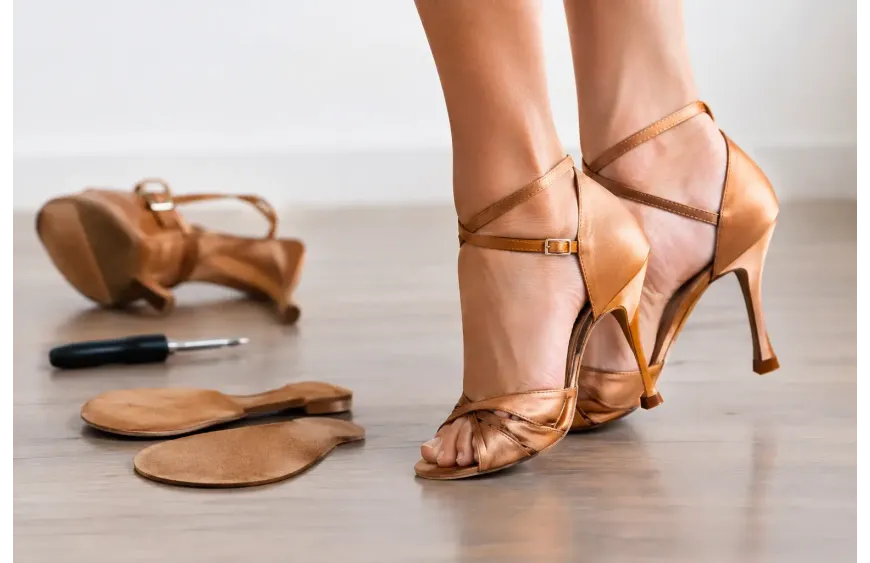
A favorite pair of ballroom shoes often reaches its best point just before the sole wears out. They have molded to your feet, the straps sit comfortably, and you know exactly how they respond through a turn. So, can ballroom shoes be resoled? Often, yes - but whether it is the right choice depends on the shoe’s construction, the condition of the upper and heel, and the type of dancing you do.
For many dancers, replacing the suede outsole can give a well-fitting shoe a useful second life. For others, especially when support or heel stability has begun to fail, a new pair is the safer investment. Knowing the difference helps you protect both your feet and your dancing.
Can Ballroom Shoes Be Resoled?
Most ballroom, Latin, and smooth shoes with a traditional suede sole can be resoled by a skilled shoe repair professional who understands dance footwear. The repair generally involves removing the worn sole material, preparing the shoe’s base, and applying a new suede sole. A proper repair should preserve the shoe’s shape, flexibility, and contact with the floor.
That said, not every dance shoe is a good candidate. Dance shoes are lighter and more flexible than street shoes. Their soles, shanks, heel attachments, and delicate uppers are designed for controlled movement rather than everyday pavement. A repairer who uses heavy materials, changes the sole thickness too much, or does not set the heel correctly can alter the way the shoe feels underfoot.
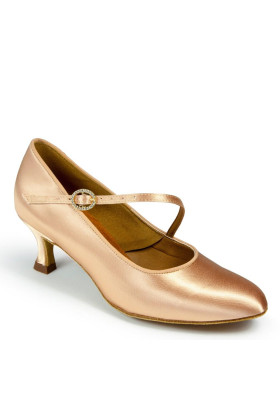
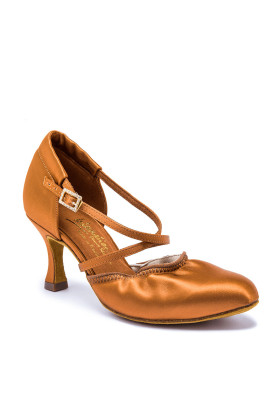
It also matters which shoe you own. Leather or satin ballroom shoes with cemented suede soles are often the most straightforward to repair. Practice shoes and teaching shoes may be repairable as well, depending on their construction. Shoes with molded rubber bottoms, very thin split soles, damaged platforms, or heavily worn synthetic uppers may not be worth restoring.
When Resoling Is a Smart Choice
Resoling makes the most sense when the upper portion of the shoe is still in excellent condition. If your shoes fit beautifully and the only major issue is bald, thin, or torn suede beneath the ball of the foot, a new sole can be a practical option.
Look closely at the shoe before deciding. The straps or vamp should not be stretched beyond support, leather should not be cracking, and stitching should be secure. On closed-toe standard or smooth shoes, check the toe box and sides for separation. On Latin sandals, inspect every strap connection, buckle, and rhinestone setting. Cosmetic wear is one thing; a shoe that no longer holds the foot securely is another.
Heel condition is equally important. A heel tip can usually be replaced when it becomes worn or uneven. But if the heel itself feels loose, sits crookedly, or has begun pulling away from the shoe, the repair may be more involved. Dancers rely on a stable heel for balance, posture, and confident weight changes, particularly in dances with pivots, spins, and quick directional changes.
A resole can be especially worthwhile when you have a hard-to-fit foot. Dancers with narrow heels, wider forefeet, bunions, high insteps, or a strong preference for a particular brand and heel shape may find it difficult to replace a pair that fits perfectly. Extending the life of a supportive, broken-in pair can be more valuable than starting over with an unfamiliar fit.
Signs It Is Time to Replace Rather Than Repair
A worn sole is not always the real problem. If the shoe has lost its structure, resoling will not restore the support it once provided.
Replace the shoes when the upper has become loose enough that your foot slides inside, when the shank feels broken or overly soft, or when the heel is unstable. You should also retire shoes that twist noticeably through the arch, show deep cracks in the material, or have repeated separations around straps and seams. These issues can change foot placement and increase the risk of a rolled ankle or sore forefoot.
Pay attention to how the shoes feel during dancing. If you are gripping with your toes to keep the shoe on, if your balance on one foot has become less secure, or if a formerly comfortable pair suddenly causes pressure or fatigue, the shoe may be past its useful life. Do not assume that a fresh sole will solve an internal support problem.
Competition dancers should be especially selective. A repaired sole can perform very well when the work is excellent, but an important event is not the ideal time to test an unfamiliar repair. Keep a newer, dependable pair ready for competitions, showcases, or examinations. A resoled pair can become an excellent practice or class shoe once you have confirmed that it moves as expected.
What a New Suede Sole Changes
The suede on ballroom shoes is not simply there for appearance. It creates the controlled slide dancers need on a suitable wood or dance floor. Fresh suede usually offers more consistent traction than a sole that has been worn smooth, contaminated with dirt, or torn at the edges.
New suede may initially feel grippier than your old sole. This is normal, particularly if your previous shoes had become very slick. Use a dance shoe brush to roughen the nap lightly and remove debris. Brush in one direction, then across the sole as needed, checking the feel on the floor rather than aggressively scratching the material.
The goal is not maximum grip. Ballroom and Latin dancers need a balance between traction and glide. Too much grip can make turns feel stuck and place extra stress on knees and ankles. Too little grip can make controlled movement difficult. Floor conditions vary, so a sole that feels ideal at one studio may need a small amount of brushing at another venue.
Choosing the Right Repair Professional
Before leaving your shoes for repair, ask whether the professional has worked on ballroom or Latin shoes before. Explain that you need dance suede rather than an ordinary street-shoe sole, and clarify whether you want the full sole replaced or only a worn section repaired.
Bring both shoes, even if only one looks damaged. The repairer can compare wear patterns and match the finished sole thickness more closely. If your shoes have a flared heel, slim heel, Cuban heel, or a specialized dance heel, point it out. Heel caps and heel tips need to suit the shape of the original heel and sit level on the floor.
Once the shoes are returned, do not wear them immediately for a long practice session. Test them first at home on a clean surface or during a short class. Feel for any edge that catches, unusual stiffness through the ball of the foot, uneven heel contact, or a change in how the shoe bends. If anything feels wrong, stop wearing them until the repair can be checked.
Help Your Ballroom Shoes Last Longer
The simplest way to delay resoling is to reserve your dance shoes for dancing. Wearing suede-soled shoes outdoors, across parking lots, or on rough flooring quickly damages the sole and embeds grit in the suede. Carry them in a dance bag and change into them at the studio or venue.
Brush the soles regularly, especially after dancing on dusty floors. Store shoes dry and out of direct heat, and allow them to air out after a long session rather than sealing them in a damp bag. For satin shoes, handle spills promptly and carefully, since moisture marks and stains can be difficult to remove. For leather shoes, gentle cleaning and appropriate conditioning can help prevent the upper from drying out.
It is also helpful to rotate between two pairs when you dance frequently. One pair can air out while the other is in use, and you are less likely to push a worn pair beyond the point where repair is sensible. Many dancers keep a comfortable practice pair alongside a fresher pair for performances or competitions.
A Fit Check Before You Commit to a Repair
If you are unsure whether your shoes are worth resoling, put them on and check the fundamentals: your heel should stay contained, the arch should be supported without painful pressure, and your toes should lie naturally rather than curl for grip. Walk, rise onto the ball of the foot, and make a few controlled turns on an appropriate floor.
A shoe that still fits securely and feels balanced may deserve a new suede sole. A shoe that has become unstable, stretched out, or painful is better replaced, even if the old pair has sentimental value. For dancers in the Toronto area who want help assessing fit or choosing their next ballroom, Latin, practice, or social dance shoe, Dancewear Champions can provide knowledgeable in-person fitting guidance.
The best decision is the one that lets you step onto the floor without thinking about your footwear. Keep a well-fitting pair maintained, repair it when the structure is sound, and replace it when your body is telling you the support is gone.