


- 31 August, 2026
- 14
- 0
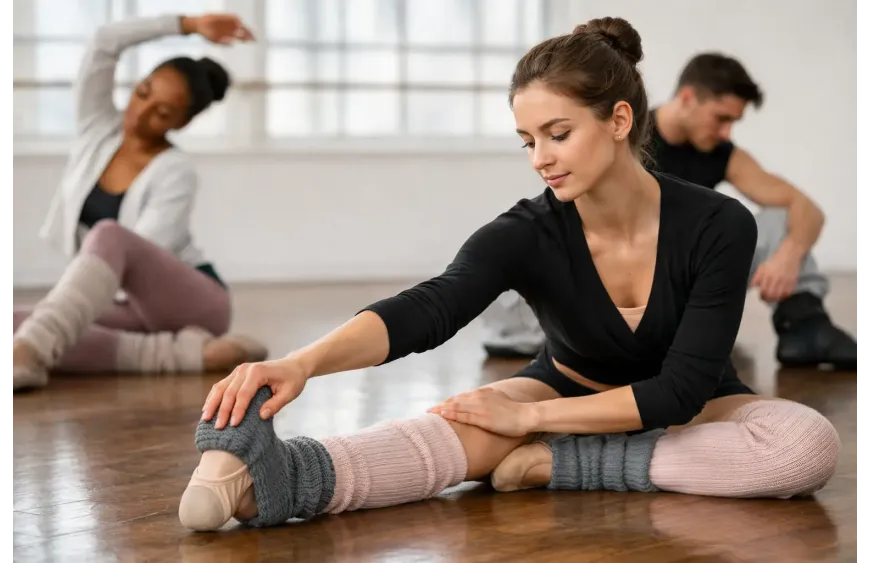
A cold ankle can turn a clean cha-cha lock step into a cautious one. Tight hips can make a ballroom promenade feel restricted, and an unprepared back may limit the length and ease of a port de bras. The best dancer warmups do more than raise your temperature. They prepare the joints, muscles, balance, coordination, and focus that your style of dance asks for.
A good warmup should leave you feeling more mobile, switched on, and ready to move with control - not tired before class, practice, or competition. The exact routine will depend on whether you are heading into a Latin round, a ballet class, a social dance evening, or a long rehearsal. Still, the same principle applies: start gently, build heat, mobilize the areas you will use, then rehearse movement patterns at an easy intensity.
What Makes a Warmup Work for Dancers?
Walking on a treadmill or holding a deep hamstring stretch may be useful in some situations, but neither fully prepares a dancer to point, pivot, balance, rotate, travel backward, or work through the floor. Dance is dynamic. Your warmup should be dynamic, too.
Begin with movement that increases circulation, then add controlled joint mobility. After that, use small dance-specific actions to wake up the feet, legs, core, arms, and posture. Save long, relaxed static stretches for after dancing or for a separate flexibility session, when the body is already warm. A brief held stretch can feel good before class, but forcing range before your muscles are ready can make movement feel less stable.
For most dancers, 10 to 15 minutes is enough. If you are preparing for a competition, performance, or a demanding rehearsal, allow more time so you are not rushing through the early stages.
The Best Dancer Warmups Start With Heat
Start with two to four minutes of low-impact, full-body movement. March in place with purposeful arm swings, walk around the studio, take easy step-touches, or use gentle side steps with relaxed torso rotation. The goal is not cardio training. You simply want to feel warmer and slightly more alert.
As your body temperature rises, add soft knee lifts, heel digs, and light hamstring curls. Keep your ribs stacked over your pelvis rather than letting the lower back arch. This is particularly helpful for ballroom and Latin dancers, whose posture needs to remain supported while the legs move freely underneath.
If you are warming up in a small space at a competition, a few minutes of marching, side steps, and controlled rises can be more useful than trying to do large movements beside the dance floor. Choose what fits the space and your footwear safely.
Mobilize the Joints That Do the Most Work
Dancers often focus on stretching big muscles while overlooking the smaller joints that make technique possible. Ankles, feet, hips, thoracic spine, and shoulders all need attention.
Feet and Ankles
Start with slow ankle circles in both directions, keeping the movement controlled rather than floppy. Then practice rolling through the feet from heel to ball to toe. Add several slow rises and lowers, holding lightly onto a wall or chair if needed. Think about pressing through the big toe, little toe, and heel evenly before lifting.
For Latin, salsa, bachata, and social dancers, this work helps prepare the foot pressure and quick weight changes needed for turns and rhythm actions. Ballroom and smooth dancers benefit from the same preparation because it supports cleaner lowering, quieter steps, and a more secure connection to the floor.
Wear the shoes you plan to dance in for the final part of your warmup whenever possible. A proper dance shoe changes how the foot articulates and how your balance feels. Practice shoes may be the better choice for a long warmup, while competition shoes can be reserved for a few careful floor checks before you dance.
Hips, Spine, and Shoulders
Use hip circles, gentle pelvic tilts, and controlled leg swings to explore comfortable range of motion. Keep leg swings small at first. The purpose is to free the hip joint, not to throw the leg as high as possible.
For the spine, try slow ribcage circles and easy upper-body rotations with the hips facing forward. This is valuable for dancers who need rotation through the upper back without losing their center. Add shoulder rolls, arm circles, and a few reach-and-pull actions to prepare frame, styling, and overhead arm lines.
Avoid aggressive twisting if your back feels stiff. Smaller, smoother movements are usually more productive than pushing for a dramatic crack or stretch.
Add Dance-Specific Movement Before You Dance
Once you are warm and mobile, spend five minutes rehearsing the basic mechanics of your discipline. This is the part that turns general exercise into one of the best dancer warmups for your own goals.
Ballroom and American smooth dancers can practice weight transfers, slow walks forward and backward, gentle body sway, and compact quarter turns. Focus on standing over the supporting leg and keeping the head, ribs, and hips organized. If you dance with a partner, begin with easy connection exercises before launching into full patterns.
Latin dancers can work through Cuban motion slowly, alternate bent and straight legs, basic rumba walks, cha-cha chasses, and spot-turn preparation. Do not chase speed immediately. Clean placement and grounded foot pressure first will make fast actions feel more available later.
Ballet dancers may begin at the barre with demi-pliés, tendus, dégagés, and controlled relevés. Keep the turnout within a range you can maintain without rolling in at the feet or gripping through the hips. For younger dancers especially, correct alignment is more useful than forcing a larger position.
For jazz, contemporary, gymnastics, or performance rehearsal, include small squats, lunges, traveling steps, and gentle jumps only after the ankles and knees feel ready. Land softly and quietly. If your choreography includes turns, begin with spotting drills and quarter or half turns before attempting multiple rotations.
A Simple 12-Minute Pre-Dance Routine
When you need a dependable routine, use this sequence and adapt the final section to your style:
- Spend three minutes marching, step-touching, side stepping, and swinging the arms naturally.
- Take three minutes for ankle circles, foot rolls, slow rises, hip circles, pelvic tilts, and shoulder rolls.
- Use two minutes for controlled leg swings, ribcage rotation, and gentle reaches through the arms.
- Finish with four minutes of dance basics: walks, weight changes, turns, pliés, rises, or rhythm actions relevant to your class.
Keep the effort moderate. You should be able to speak in short sentences, and your movements should become sharper as you go. If you arrive feeling especially stiff, extend the first two stages rather than skipping ahead to full-out choreography.
Warmup Mistakes That Can Hold You Back
The biggest mistake is treating every day the same. A dancer who has been sitting at work all day may need extra attention for the hips and upper back. A dancer returning from a long car ride may need more ankle and calf mobility. Someone who has already taken a class may only need a short reset before a second session.
Another common issue is warming up in clothing that limits the very movement you are trying to assess. Practicewear should let you see alignment and move freely without constant adjusting. Layers are useful in a cool studio, especially at the beginning, but remove bulky pieces once you are properly warm so you can feel your line, placement, and connection clearly.
Finally, do not confuse discomfort with productive preparation. Mild stiffness that improves as you move is common. Sharp pain, swelling, numbness, giving way, or pain that changes your technique is a reason to stop and seek guidance from an appropriate health professional. A warmup supports training, but it does not replace injury care.
Make Your Routine Easy to Repeat
The best routine is the one you will actually do before every class. Keep it simple enough to remember, and make small changes based on your dance style, schedule, and body that day. Parents can help young dancers build the habit by allowing enough time to arrive calmly, change into proper dancewear, and warm up without rushing.
For dancers in the Toronto and GTA area who want help choosing practice layers, supportive dance shoes, or apparel that allows full movement, Dancewear Champions can help you find options suited to your discipline and fit needs. Arrive warm, stay attentive to your body, and let your first full step feel like a continuation of preparation rather than the beginning of it.
Tags Dancer Warmups
Related Products
Ballet Warm-UP 01
$21.25US
Ballroom Robe 02
$68.00US

Ballroom Robe 03
$76.50US
Sale
Velvet Ballroom Robe
$119.00US $84.15US
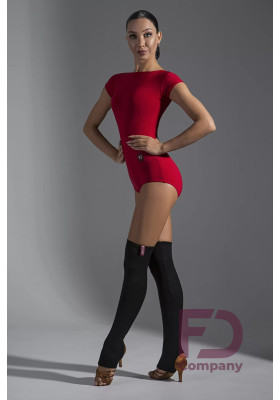
Leg warmers - 01
$29.75US

Ballroom Warm-UP - 03
$59.50US