- 21 August, 2026
- 220
- 0
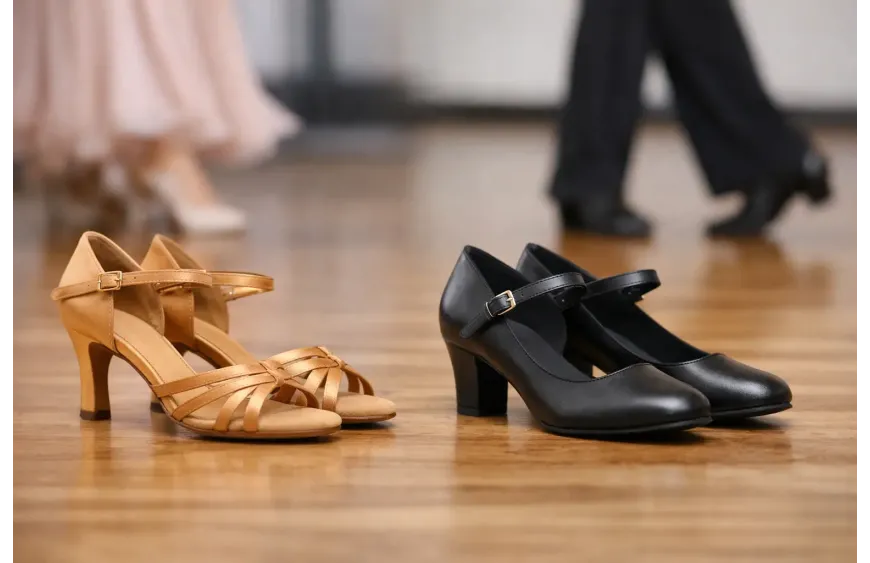
The wrong shoe usually tells you quickly. A heel catches during a turn, a sole grips when you need to glide, or the ball of your foot aches halfway through rehearsal. When comparing ballroom shoes versus character shoes, the key difference is not simply appearance. Each is built for a different movement vocabulary, floor surface, and performance setting.
A character shoe may look close enough to a ballroom heel at first glance, especially in a classic black or tan style. But for ballroom, Latin, social dancing, or DanceSport, a purpose-built ballroom shoe gives the footwork, connection to the floor, and flexibility that partner dancing demands. Character shoes are often the better choice for musical theater, character ballet, and stage choreography. Knowing where each one excels helps you buy once, practice comfortably, and dance with more confidence.
Ballroom Shoes Versus Character Shoes: The Main Difference
Ballroom shoes are designed around travel, turns, weight changes, and close connection with a partner. Most have suede soles, which provide controlled slide on a suitable dance floor. The upper is typically soft leather, satin, or a flexible synthetic material, allowing the dancer to point the foot, articulate through the ball of the foot, and respond quickly to lead-and-follow movement.
Character shoes are stage shoes. They are commonly used for character ballet, musical theater, jazz-influenced choreography, and performances where a polished, period-inspired shoe is part of the costume. They generally have a more structured upper, a sturdier heel counter, and a firmer sole than ballroom footwear. That construction supports repeated stage movement and creates a clean theatrical line, but it can feel restrictive during sustained ballroom technique.
Neither category is automatically "better." The right shoe depends on what you are dancing, where you are dancing it, and what your teacher or choreographer expects.
Sole Design Changes How You Move
The sole is often the most decisive feature. Ballroom shoes usually use a suede sole that lets the dancer pivot, brush, and travel without sticking to the floor. Suede also offers enough resistance to feel grounded, which is especially helpful when learning turns or working with a partner. It does require care: brushing the sole periodically removes buildup and restores traction.
Character shoes may have leather, synthetic, or more heavily finished soles. These can be durable for rehearsal rooms and stages, but they may grip differently from suede. On a ballroom floor, a sole that is too slick can feel unstable, while a sole with too much grip can place extra torque on the knees and ankles during turns.
For social ballroom, Latin, salsa, bachata, American smooth, or competition practice, a suede-soled dance shoe is usually the practical choice. For a theater production, follow the production's footwear direction first. Some choreographers specifically request character shoes because their profile, sound, and stage look suit the piece.
A note about outdoor and street surfaces
Neither shoe is intended as an outdoor walking shoe. Pavement quickly wears down suede ballroom soles and can damage the edges of delicate heels. Character shoes may look more substantial, but they are still performance footwear. Change into them at the studio, venue, or theater whenever possible.
Flexibility and Foot Articulation
Ballroom dancers need to feel their feet. In Latin and rhythm styles, the foot often works through a pointed toe, a pressured ball of foot, and a settled heel. In standard and smooth, the dancer needs a clean heel lead, controlled rise and fall, and an easy transition through the shoe. A flexible ballroom sole supports these actions without asking the foot to fight the shoe.
Character shoes are intentionally more structured. That can be useful for stage work, particularly when the dancer needs a stable base while moving through choreography in a dress or costume. Yet that extra structure may limit the refined foot articulation that ballroom technique asks for. A dancer who wears character shoes to a ballroom lesson may be able to complete the steps, but may not develop the same floor awareness or turning control.
This is particularly relevant for beginners. A first proper ballroom shoe can feel softer and less protective than everyday footwear, but that is part of its purpose. It is meant to move with the foot, not hold it rigidly in place.
Heel Shape and Placement Matter More Than Heel Height
Both ballroom and character shoes come in a range of heel heights, from low practice options to higher performance styles. The location and shape of that heel are just as important as its height.
Ballroom heels are designed to keep the dancer balanced during partner work. Ladies' Latin shoes often have a more centered, tapered heel that supports a lifted, forward-moving posture. Ballroom or standard styles may use a more stable flare heel, particularly for dancers who want security during long classes and progressive movement. Men's ballroom shoes generally use a low, stable heel that helps establish correct weight placement.
Character heels are made with stage appearance and theatrical movement in mind. They are often broader and more substantial, especially in lower-height styles. This can make them feel reassuring to dancers who are new to heels, but the heel placement may not support the same action needed for Latin hip movement, quick pivots, or smooth partner turns.
If you are choosing your first heeled shoe, do not assume lower is always the only answer. A properly fitted, well-balanced dance heel can feel more stable than a poorly fitted low shoe. Start with a height you can control consistently, then consider your class style, instructor guidance, and how often you will wear it.
Fit: Snug for Ballroom, Secure for Character
Ballroom shoes should fit close to the foot. Soft dance materials can stretch with wear, so excessive room at the beginning often becomes slipping later. Toes should lie naturally without being painfully compressed, the heel should stay in place, and straps should secure the foot without cutting in. Open-toe Latin sandals are commonly worn quite snug because a loose sandal makes it harder to point and place the foot accurately.
Character shoes need a secure fit as well, but their more structured construction can make the fitting experience different. You should have enough room for comfortable toe placement and no heel lift when walking or dancing. A strap across the instep is common and helps keep the shoe stable during stage movement.
Sizing varies noticeably by brand, material, foot width, and shoe style. Do not choose only by your everyday street-shoe size. Measure both feet, fit the larger foot, and consider whether you will wear tights, socks, or bare feet. For dancers in the Toronto and GTA area, an in-person fitting can be especially helpful when deciding between a first ballroom shoe and a character style.
Which Shoe Should You Choose for Your Dance Class?
Choose ballroom shoes when your class focuses on ballroom, Latin, American smooth, rhythm, salsa, bachata, social partner dance, or DanceSport. The correct sole and flexibility will make learning easier and help protect the quality of your technique as your dancing progresses.
Choose character shoes when you are taking character ballet, musical theater, or a performance class where the teacher specifies them. Their structured shape and stage-ready finish suit choreography that calls for a classic theatrical shoe rather than a partner-dance shoe.
There are a few gray areas. A theater production may include ballroom-inspired choreography but still require character shoes for costume consistency. A dancer taking occasional social classes may prefer a low-heeled, closed-toe ballroom practice shoe instead of a sandal. Children and youth dancers may need an especially stable shoe that meets their studio, syllabus, or competition rules. In those situations, the dance style and instructor's requirements should lead the decision.
Consider the Rest of Your Dancewear
Footwear works best when it supports the whole job you need it to do. For ballroom practice, clothing should allow easy rotation, extension, and partner connection. For a showcase or competition, the shoe should also complement the hemline, costume color, and visual line of the leg. A delicate Latin sandal may suit a rhinestone dress, while a closed ballroom shoe can be a more natural match for a standard gown or flowing smooth skirt.
For theater, character shoes often disappear into the costume design or become part of the character itself. The goal is not always to show off the shoe. It is to make the movement and the overall stage picture look intentional.
Your shoes should never be an afterthought. Bring your class details, planned dancewear, and any teacher requirements when choosing a pair. The right pair will let you spend less energy managing your feet and more energy enjoying every step.
Tags Ballroom shoes, social dance, compare soles, character shoes