


- 10 November, 2026
- 10
- 0
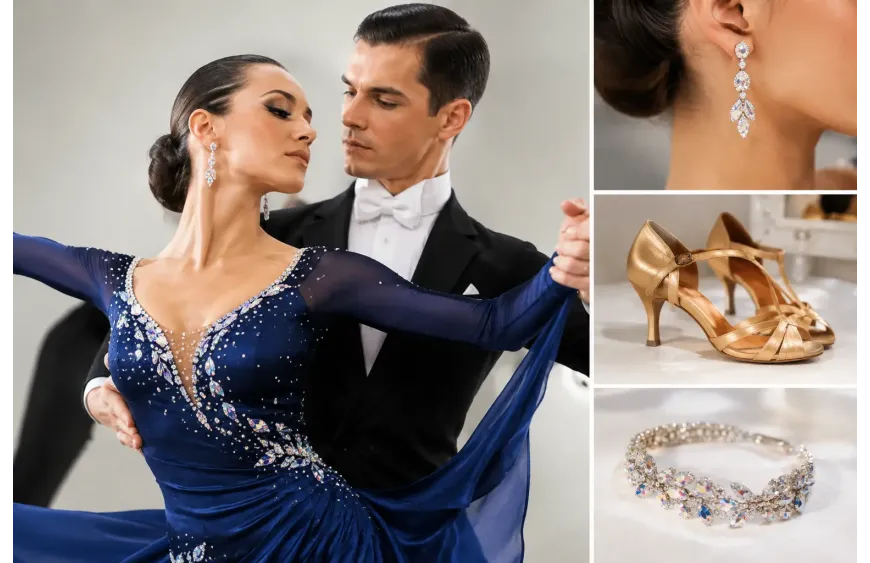
A rhinestone earring can make a dancer’s head line look sharper from across the floor. The wrong pair can tug at the earlobe, disappear against a dark hairstyle, snag a costume, or compete with every crystal already on the dress. Ballroom jewelry is not simply an extra accessory. It is part of the visual line you create in motion.
For social dancing, a little sparkle can make an outfit feel finished. For showcases and competition, jewelry needs to work harder: it should complement the costume, stay comfortable through turns, and read clearly under bright ballroom lighting. The best choice depends on your dance style, neckline, hairstyle, event, and how much detail is already in your look.
What Ballroom Jewelry Should Do
Jewelry for ballroom and Latin dancing has a practical job. It draws attention upward toward the face, supports the character of the costume, and adds light-catching detail without creating distraction. Because partners and judges see dancers from several angles, a piece that looks lovely in a mirror may not always have the same effect on the floor.
A useful rule is to choose one focal point. If your dress has a heavily stoned neckline, dramatic earrings may be all you need. If the bodice is clean and simple, a coordinated necklace or bracelet can bring more finish to the look. When every element is large, bright, and competing for attention, the result can look busy rather than polished.
Fit matters as much as design. Jewelry should remain secure through spins, arm styling, quick changes of direction, and close partner work. Before an event, wear it during a full practice run instead of judging comfort while standing still.
Match Jewelry to the Dance and Costume
Latin and rhythm looks
Latin dresses are often designed for movement, with fringe, cutouts, asymmetric necklines, open backs, or bold crystal patterns. Earrings are usually the strongest choice because they frame the face without interrupting the costume’s lines. Drop earrings can create a beautiful sense of movement, but they should be light enough to stay comfortable and short enough not to strike the neck or shoulder during fast actions.
A necklace is more dependent on the neckline. An open, simple neckline may suit a close-fitting rhinestone necklace, while an asymmetric, halter, or heavily decorated bodice often needs no necklace at all. If a necklace crosses bare skin and shifts while you dance, it can look untidy in photos and feel distracting during a performance.
Bracelets can suit Latin styling, especially with sleeveless designs, but consider your arm actions and your partner connection. A wide bracelet or sharp setting can catch on chiffon, fringe, mesh, gloves, or a partner’s costume. Smooth, secure pieces are usually the better choice.
Standard and smooth looks
Ballroom gowns and American smooth dresses often create a longer, softer silhouette. Jewelry can support that elegance without taking attention away from floats, sleeves, and the movement of the skirt. Crystal earrings, a refined necklace, or a coordinated hair accessory can work beautifully, particularly when the gown has a relatively clean bodice.
For high necklines, illusion mesh, elaborate appliqué, or heavy stoning around the collarbone, skip the necklace and let earrings provide the sparkle. This keeps the upper body from looking crowded. If your gown has a lower neckline, a delicate necklace can echo the gown’s shape, but it should sit securely and not bounce as you travel.
Smooth dancers should also check jewelry against drapes and float attachments. A piece that looks secure at the start of a dance may catch when fabric passes across the arm or shoulder. Test the complete costume together, including gloves, hair accessories, and any decorative wrist details.
Social dance and practice wear
For a social dance, comfort and personal style lead the decision. A simple pair of earrings, a small necklace, or a slim bracelet can add polish to a favorite dance top and skirt without feeling like costume jewelry. Choose pieces you will not worry about losing, adjusting, or removing halfway through the evening.
For regular practice, less is usually more. Stud earrings or small hoops are often practical, especially in a busy studio where dancers are turning close together. Save larger pieces for a showcase, special social, or dress rehearsal. The goal of practice wear is freedom of movement and focus, not a fully finished performance look.
Choose Scale for the Floor, Not Just the Mirror
Ballroom jewelry needs enough presence to be visible at a distance. Tiny, delicate pieces can be elegant for social dancing, but they may disappear beneath stage lights or from a judge’s viewpoint. Conversely, extremely oversized jewelry can overpower a youthful dancer, a petite frame, or a minimal costume.
Think about the size of the venue and the amount of sparkle in the dress. A small studio showcase may call for less dramatic accessories than a large competition ballroom. Photography also changes the equation. Clear rhinestones and crystal details tend to reflect light well, while matte or very dark jewelry may need more size to register.
Hair color matters, too. Bright earrings can stand out against dark hair, while dancers with light hair may benefit from a slightly bolder shape or a contrasting stone color. This does not mean matching every accessory exactly. It means checking whether the jewelry still frames the face when viewed from a few steps away.
Color Coordination Without Overmatching
Clear crystal is a reliable choice because it works with almost any costume color. It is especially useful when a dancer owns several outfits or wants one pair of earrings for multiple events. Colored stones can be striking when they repeat a detail already present in the dress, such as a crystal accent, appliqué color, or fabric tone.
Avoid trying to match every shade perfectly. Ballroom fabrics, rhinestones, and lighting can make two nearly identical colors look slightly different. A coordinated palette is more forgiving than an exact match. For example, a deep blue gown may work with clear crystal, silver-tone details, or a related cool-toned accent rather than requiring one exact blue stone.
Metal tone is a secondary consideration. Silver-tone settings tend to suit clear and cool-colored crystals, while gold-tone settings can warm up red, bronze, champagne, and jewel-toned costumes. What matters most is whether the jewelry complements the overall costume rather than whether every metal detail is identical.
Secure It Before You Dance
Even beautiful ballroom jewelry loses its effect if it twists, falls, or needs constant adjustment. Check earring backs, clasps, and stone settings before every event. Bring spare earring backs and a small pouch so jewelry does not get scratched or tangled in your dance bag.
For pierced earrings, use secure backs suited to the weight of the earring. Clip-on styles can be useful for dancers without pierced ears, but test them for a full practice session. If they pinch after ten minutes, they are unlikely to feel better after several heats. Comfort affects expression, posture, and confidence.
Put jewelry on after makeup, hair spray, and costume dressing where possible. Hair products can dull stones over time, while perfume and lotion may affect finishes or leave residue. Remove pieces carefully after dancing, wipe them with a soft dry cloth, and store them separately to protect the settings.
Check Event Rules Before Finalizing Your Look
Competition jewelry rules can differ by age group, level, category, and organizer. Juvenile and youth dancers may have stricter restrictions than adult competitors, and rules can change between events. A costume that is appropriate for an adult Latin showcase may not be permitted in a youth category.
Read the current event guidelines before purchasing or wearing jewelry for competition. When a rule is unclear, choose the simpler option or confirm with the organizer well before competition day. This is particularly helpful for parents preparing a young dancer’s first event, when there are already many details to manage.
For social events and performances without formal restrictions, let the costume and comfort guide you. A well-chosen piece should make the dancer feel more put together, not more concerned about what might come loose.
Build a Small, Useful Jewelry Collection
Most dancers do not need a separate jewelry set for every outfit. A practical starting point is a versatile pair of clear crystal earrings, a second pair with more movement for performance looks, and one necklace that works with open necklines. Add color-specific pieces only when a costume calls for them.
When choosing accessories alongside a new dress, bring the full picture together: neckline, hair plan, shoes, and any existing crystals or hair pieces. At Dancewear Champions, dancers in the Toronto area can use personalized shopping guidance to consider the whole look rather than choosing each item in isolation.
The right jewelry should feel like part of your dancing. If it stays secure, supports the costume, catches the light at the right moments, and lets you forget it once the music starts, it is doing exactly what it should.
Tags Ballroom Jewelry, Latin and rhythm looks, Jewelry to the Dance and Costume
Related Products

Performance Ballroom Dress 04
$1,530.00US

Sale
Performance Latin Dress 03
$1,700.00US $1,274.15US

Sale
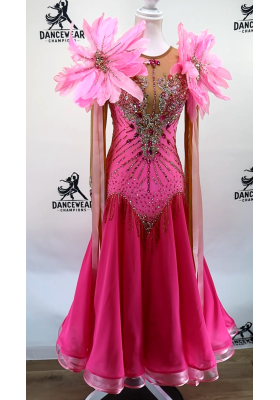
Performance Ballroom Dress 08
$2,975.00US $1,954.15US
Sale
Performance Ballroom Dress 09
$1,700.00US $1,274.15US