


- 01 September, 2026
- 77
- 0
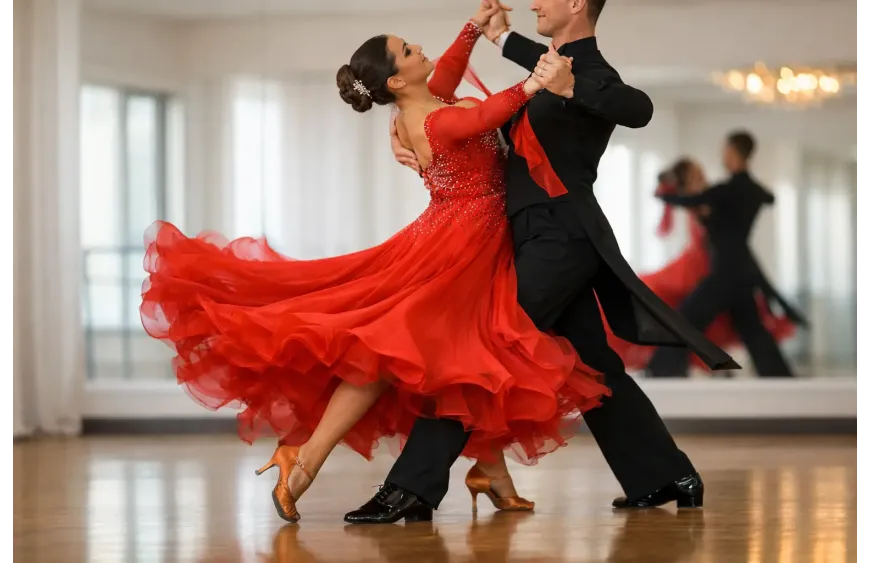
A beautiful dress that restricts your rise and fall, catches under your heel, or shifts every time you turn will not feel beautiful for long. The right ballroom look has to do more than photograph well. It needs to support your frame, your choreography, and the way you actually dance.
Search terms such as “long ballroom dress, ballroom dance dresses, ballroom dance dresses for sale, ballroom dancewear, ballroom costume, ballroom dance dress, ballroom attire, ballroom dress, dancesport dress, traditional dance costume” can lead to very different garments. Knowing what separates them helps you choose confidently, whether you are preparing for your first social dance, a showcase, or a DanceSport competition.
Start With Where and How You Will Dance
The most practical place to begin is not color or sparkle. Start with the occasion. A dress for weekly lessons has different demands than a competition gown, and a social-dance outfit does not need the same level of decoration as a stage costume.
For practice, look for ballroom dancewear that lets an instructor see your posture, leg action, and body line. A fitted top with a flowing practice skirt, a comfortable knit dress, or dance pants with a polished top can all work well. Stretch, secure straps, and easy care matter more than dramatic embellishment when you are dancing several times a week.
For a showcase or formal social event, you may want greater visual impact while keeping the garment comfortable enough for a full evening. A ballroom dress with a soft skirt, open back, sleeve detail, or carefully placed sparkle can create presence without becoming overly heavy. Consider the venue too. A very long hem can look elegant in a ballroom but may be impractical in a crowded social-dance setting.
A dancesport dress is built for the floor and for attention from a distance. Competition pieces often use stronger color contrast, rhinestones, appliqué, floats, layered skirts, and intentional cutouts. They should still feel stable through spins, shaping, and fast direction changes. More decoration is not automatically better. The strongest competition look is one that flatters your movement and remains secure from the first heat to the last.
Choosing a Long Ballroom Dress
A long ballroom dress is most closely associated with Standard, International Ballroom, and American Smooth. Its skirt should expand with your movement while allowing clean footwork underneath. When a skirt is too narrow, your stride becomes smaller. When it is too full or too long, it can tangle at the ankles, catch a heel, or make it harder to move quickly in a busy partnership.
Length deserves special attention. Try the dress with the shoes you plan to wear, not barefoot or in socks. The hem should clear the floor enough to avoid stepping on it, while still maintaining the graceful line you want. If you switch between heel heights, check the length again. A change of even a small amount can affect both safety and appearance.
Look at what happens when you raise your arms into frame. Sleeve openings should not pull at the shoulders, the bodice should stay in place, and any floats should move freely without wrapping around your partner or obscuring your face. If you wear a bra or built-in support, test it with the dress during a few turns and a full breath. A secure fit should feel reassuring, not restrictive.
Fabric changes how a gown behaves. Chiffon and lightweight mesh create air and movement. Stretch jersey and knit fabrics can be comfortable for practice and social dancing. Satin offers shine and a formal finish but may show creasing or feel less forgiving. Layered skirts create volume, although additional layers also add weight. There is always a balance between dramatic movement and easy wear.
Ballroom Dance Dress or Latin Dress?
Ballroom and Latin garments serve different visual and technical purposes. In Standard and Smooth, longer lines and moving skirts complement travel across the floor, rise and fall, and partnered rotation. A ballroom dance dress often emphasizes elegance through full skirts, float details, draping, or sleeves.
Latin, salsa, and bachata looks usually reveal more leg action and support sharper rhythm. Short skirts, fringe, asymmetric hems, fitted bodices, and body-conscious stretch fabrics make it easier to see Cuban motion, hip action, and fast footwork. A garment designed for Latin is not necessarily the best choice for a waltz, just as a sweeping gown may feel cumbersome for a quick cha-cha combination.
If you dance several styles, a refined practice dress or coordinated skirt-and-top combination can give you more flexibility than buying one highly specialized costume immediately. Dancers who compete in more than one division may still need separate looks once event rules, styling expectations, and performance goals become more specific.
Fit Details That Matter More Than the Label
Dancewear sizing can vary across brands, so the label alone is only a starting point. Take current measurements and compare them with the garment’s size chart. Pay close attention to bust, waist, hips, torso length, and, for a full skirt, the finished length. A dress can fit at the waist but still pull across the ribs or slide at the shoulders during movement.
The best test is to move as you dance. Walk with your normal stride, raise your arms, rotate your torso, sit briefly, and do several turns if space permits. Check whether the neckline stays flat, the straps remain comfortable, and the skirt returns to place. For partnership dancing, consider how the back, sleeves, and embellishments feel in closed hold. Rough stones, bulky closures, or exposed edges can be distracting for both partners.
Support is another personal decision. Some dancers prefer built-in cups or a bodysuit base, while others prefer the flexibility of wearing their own dance undergarments. A costume with an attached bodysuit can provide confidence for turns and leg lines, but it must fit the torso correctly. Too short, and it pulls. Too long, and it may bunch or shift.
When a Ballroom Costume Needs More Than a Dress
A ballroom costume is the complete performance presentation, not simply the main garment. The right accessories should support the look without interfering with dance. Dance shoes are part of that equation. A beautiful gown paired with shoes that slip, pinch, or have the wrong heel height can undermine your comfort and confidence quickly.
For a polished result, coordinate your dress with the practical pieces dancers often overlook: secure dance undergarments, hair accessories that stay in place, garment protection for transport, and shoe-care supplies. Bring a backup fastening option for competition day when possible. A loose hook or strap is a small problem until it happens minutes before you are called to the floor.
Men, youth dancers, and parents shopping for a partner should also think in terms of a complete outfit. Ballroom attire may include shirts, trousers, vests, bodysuits, skirts, or juvenile competition dresses, depending on the dancer’s category and event. Proper fit and freedom of movement matter at every age. Young dancers especially need garments that allow growth, active movement, and easy changing without looking unfinished.
Traditional Dance Costume Is Its Own Category
A traditional dance costume may be worn for cultural events, folk performances, heritage celebrations, or a specific choreographic work. It should not be treated as a generic substitute for ballroom attire. Traditional garments can carry meaningful regional, historical, and cultural details, and their styling may follow conventions that differ from ballroom competition or social dancing.
If you are choosing attire for a themed showcase, confirm the dance requirements before purchasing. Sometimes a costume-inspired color palette or silhouette is appropriate; other times, an authentic traditional garment is expected. Fit and mobility still matter, but respectful presentation should guide the choice.
Shop With the Whole Dance Day in Mind
When viewing ballroom dance dresses for sale, picture the full day rather than the product photo alone. Will you travel in it? Can you change easily? Will it stay comfortable through warm-up, waiting, and multiple dances? Does it work with your current shoes and the level of formality expected at your event?
For Toronto and GTA dancers who want help comparing silhouettes, lengths, and shoe pairings, Dancewear Champions offers the advantage of specialist guidance alongside a broad selection for practice, social dancing, showcases, and competition. Bring your dance shoes to an in-person fitting when possible, or use detailed measurements when shopping online. The right dress is the one that lets you stop thinking about your outfit as soon as the music starts.
Tags long ballroom dress, ballroom dance dresses, ballroom dance dresses for sale, ballroom dancewear, ballroom costume, ballroom dance dress, ballroom attire, ballroom dress, dancesport dress, traditional dance costume
Related Products

Ballroom Dress 02
$255.00US

Ballroom Dress 03
$212.50US
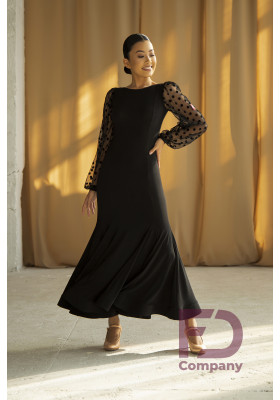
Ballroom Dress 01
$280.50US

Performance Ballroom Dress 02
$1,530.00US

Performance Ballroom Dress 06
$1,274.15US

Sale
Performance Ballroom Dress 08
$2,975.00US $1,954.15US
Sale
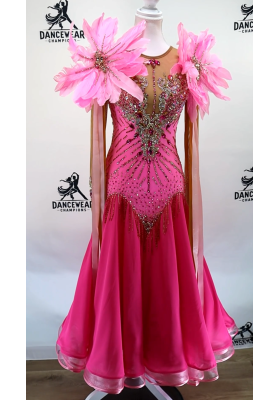
Performance Ballroom Dress 09
$1,700.00US $1,274.15US