- 25 November, 2026
- 8
- 0
A pair of ballet tights can look simple on the hanger, yet the wrong pair can distract from an entire class. A waistband that rolls, a foot that bunches in a slipper, or a shade that does not match the studio dress code can make a dancer feel uncomfortable before the first plié. This ballet tights guide breaks down the choices that matter, whether you are buying a first uniform for a young beginner or replacing tights for a busy adult dancer.
Start with the studio’s dress code
Before choosing fabric or foot style, check what the teacher, school, or performance organizer requires. Many children’s ballet programs specify a particular shade of ballet pink, along with a particular leotard color. Some schools expect footed tights for class, while others allow convertible tights as dancers become more independent.
For adult ballet classes, the rules are often more flexible. Black, pink, and skin-tone tights may all be appropriate, depending on the studio and the dancer’s preference. A more formal academy, examination class, or rehearsal may still have a uniform standard, so it is worth confirming rather than guessing.
Color is not only a style decision. Matching tights to the shoe and the studio’s expected look creates a clean, lengthened leg line that helps teachers see placement clearly. For stage work, the required shade should always take priority, since theater lighting can change how pink, tan, and nude tones appear from the audience.
Ballet tights guide: choose the right foot style
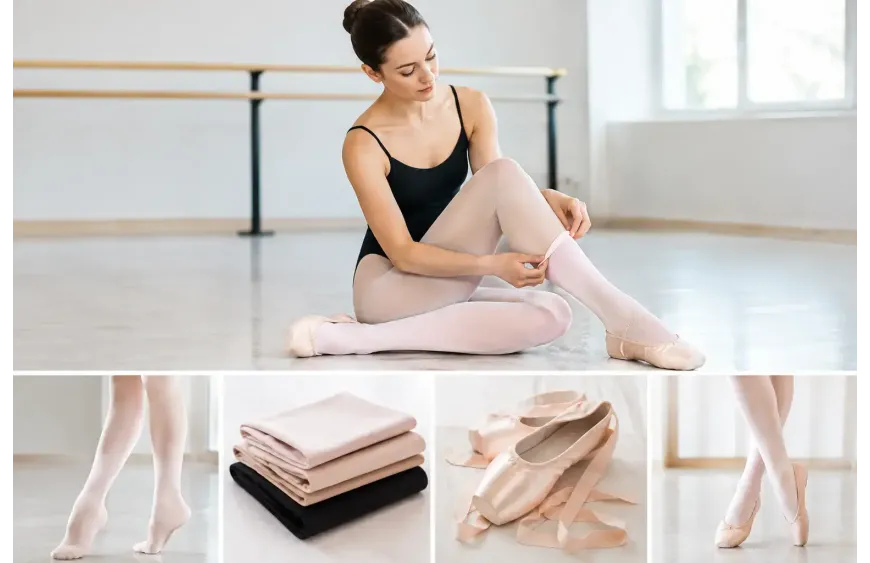
The best foot style depends on what happens in class, not just what looks familiar. Footed tights are the traditional all-in-one option. They cover the leg and foot completely, sit smoothly inside ballet slippers, and are often the simplest choice for younger dancers. If a studio requires a classic uniform, footed tights are usually the safe starting point.
Convertible tights have a small opening under the arch of the foot. The dancer can wear them over the feet for ballet class, then roll them up to expose the toes and heel when needed. This is especially helpful for dancers who move between ballet, contemporary, jazz, or conditioning work, and for dancers wearing pointe shoes who need access to their toes. The opening should sit securely under the foot without twisting or pressing into the arch.
Stirrup tights leave the heel and ball of the foot uncovered, with a band running beneath the arch. They are useful for some rehearsal, warm-up, contemporary, or jazz settings, but they are less commonly required for a traditional ballet uniform. Footless tights stop at the ankle and offer the greatest versatility for barefoot work, although they do not create the same continuous line with ballet slippers.
If you are buying for a child who only attends a weekly ballet class, footed tights are often practical and easy. If the dancer takes several styles or expects to begin pointe preparation, convertible tights may offer better long-term versatility. The choice is not about one style being superior. It is about matching the tights to the dancer’s routine.
Fabric changes how tights feel and last
Most ballet tights contain a blend of nylon and spandex or elastane. The combination provides stretch, recovery, and a close fit that moves with the body. The exact feel, however, can vary considerably.
A microfiber tight usually feels soft, opaque, and smooth against the skin. It is a popular choice for class because it gives reliable coverage, photographs well, and tends to feel more substantial than a very sheer tight. Dancers who feel self-conscious in thin tights often prefer microfiber, particularly in lighter colors.
Traditional sheer tights create a lighter, more translucent appearance. They can be appropriate for uniforms and performances where that finish is specified. Their lighter construction may feel cooler, but sheer fabric can reveal more underneath and may be less forgiving when stretched beyond its intended size.
Some tights have a matte finish, while others have a subtle sheen. Matte tights are often preferred for class and many stage settings because they look polished without reflecting much light. A shinier finish can suit certain costumes or performance looks, but it should be chosen intentionally rather than as a default.
Durability also depends on construction. Look for a smooth, even knit with enough stretch to return to shape after wear. Reinforced toes can be useful for dancers who regularly wear footed tights with slippers, although no dance tight is completely snag-proof. A dancer who trains several times a week benefits from having more than one pair in rotation rather than relying on one pair until it wears through.
Fit should feel secure, not restrictive
Ballet tights are meant to be close-fitting, but they should never make a dancer fight their clothing. When trying on tights, check that the waistband sits comfortably at the natural waist without folding, pinching, or sliding down during movement. The fabric should reach the waist and feet without hard pulling at the toes or a tight downward tug through the shoulders and torso.
A common mistake is sizing down for a smoother appearance. Tights that are too small are more likely to become sheer, strain at the seams, and rip during dressing. They can also limit a deep plié, grand battement, or stretch at the barre. If the dancer is between sizes, height and torso length often matter more than age alone. Use the size chart for the specific brand whenever possible, since sizing is not identical across all dancewear labels.
For growing children, it is tempting to buy much larger tights to make them last. Oversizing can create wrinkles at the ankles, sagging at the knees, and loose fabric inside the shoe. A little growing room is fine, but the tights should still allow the teacher to see the leg line clearly and the dancer to feel stable on their feet.
Pay attention to the gusset as well. A well-positioned gusset improves comfort and supports unrestricted movement. For dancers who spend long hours in class, small details such as a soft waistband, flat seams, and a comfortable gusset can make a noticeable difference.
Match tights with shoes and underlayers
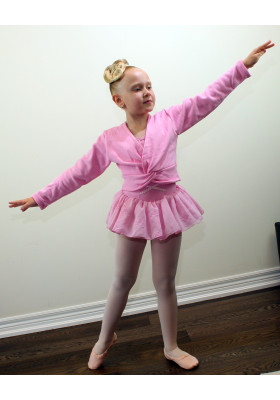
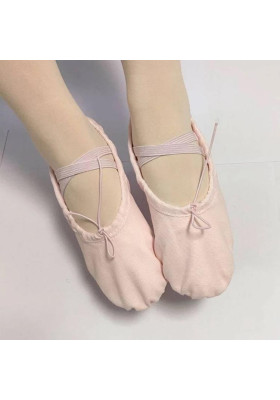
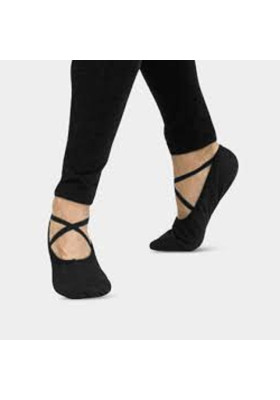
For a traditional ballet look, pink tights are generally worn inside pink ballet slippers. This keeps the line from leg to foot uninterrupted. If a school uses skin-tone tights and matching slippers, the same principle applies. Black tights are commonly paired with black shoes only when the studio or costume calls for it.
Under a leotard, tights are usually worn according to the school’s standard. Some programs prefer tights under the leotard for a very clean waistline, while others allow them over it. For young dancers, following the teacher’s expectation is easiest. For adults, comfort and studio etiquette may guide the choice.
If dancers need additional coverage, dance briefs or other appropriate underlayers should sit smoothly and remain invisible beneath the tights and leotard. Thick seams, loose underwear, or bulky layers can show through and become uncomfortable during floor work or extensions.
Care habits that protect your tights
Tights last longer when they are handled like performance apparel, not ordinary socks. Put them on with clean, dry hands and avoid rings, rough nails, or jewelry that can catch the knit. Gather each leg down to the foot first, then gradually unroll the tights up the leg instead of pulling hard from the waistband.
After class, wash tights according to the garment label. A gentle wash in cool water and air-drying are usually kinder to stretch fibers than high heat. Keeping a spare pair in the dance bag is smart for performances, examinations, and any day when a small snag becomes a larger problem at the last minute.
For dancers who attend several classes each week, rotating pairs also helps each one recover its shape between wears. It is a small habit that improves comfort and keeps the overall look neater.
When it helps to ask for fitting guidance
A size chart gives a strong starting point, but fitting questions are normal. This is especially true for dancers who are tall for their size, have a longer torso, are between sizes, need a specific skin-tone shade, or are choosing convertible tights for the first time. Parents may also need help matching a school’s uniform wording to the right product category.
At Dancewear Champions, dancers and families can get practical help selecting tights that suit their class requirements, movement needs, and preferred fit. The goal is not to overcomplicate a basic essential. It is to make sure the dancer can step into class focused on technique, confidence, and the pleasure of moving well.
Tags Ballet tights, ballet slippers, ballet shoes, ballet warmup